
BRAND ID SYSTEMS
Designing Trust, Not Just Tech
ClientDatamaranServicesBrand Inventor & Design LeadYear2014-presentLinkdatamaran.com
Datamaran®: A Brand Born out of Strategic Foresight
Summary
In 2014, sustainability looked like leaves on coins and soft-focus forests. I built Datamaran’s brand to be the opposite: a hard, navigational identity for a data company, drawn from data-lake terminology and the Frisian sailing country its founder and I come from. I conceived it from the name and trademarked logo up, and that founding system still runs the company today, from the D-shaped sail mark and signature turquoise to a rigorous brand book and four eras of evolving typography. It has carried Datamaran from a startup idea through a $33M Series C to Nasdaq’s Times Square screens, and into Fortune 500 annual reports, while staying true to one organizing idea: agile navigation through data oceans.
The sector looked one way. We went the other.
In 2014, sustainability had a look, and it was green. Leaves balanced on coins, a small earth cupped in two hands, soft-focus forests. It was the visual language of NGOs and non-profits, and it signalled exactly that: worthy, soft, non-commercial. When Datamaran’s founders set out to build something different, a hard data company for corporate risk, I shaped a brand that refused that whole vocabulary.
The metaphor came from two places at once. Data lakes, the technical term for vast pooled information, and the Frisian lake country in the northern Netherlands that the founder and I both come from, where sailing across heavy open water is second nature. Navigation through data oceans was not a marketing line. It was where we were from, applied to where the company was going.

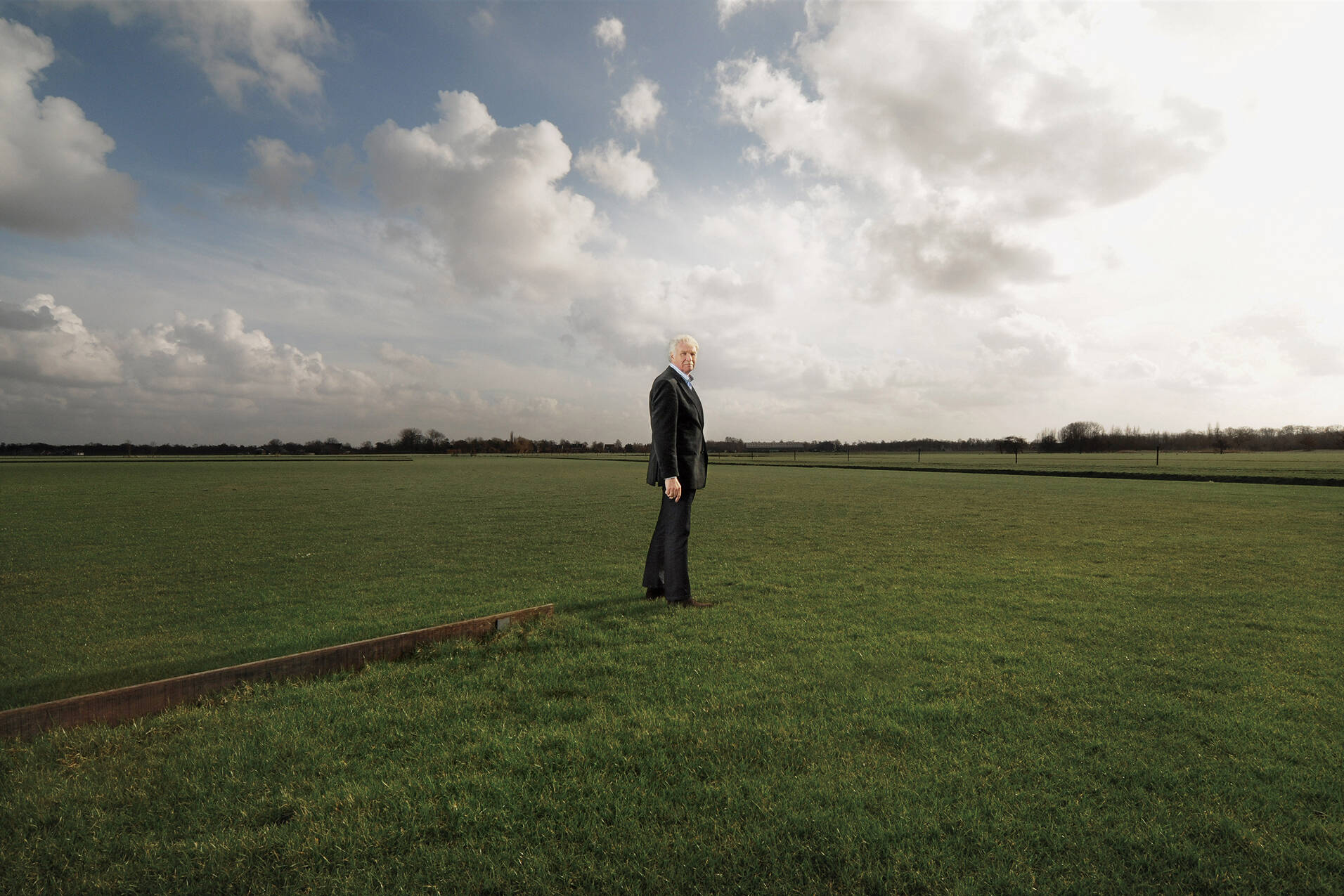
Two visual languages, one deliberate break. The sustainability sector reached for green; Datamaran navigated instead

Place-driven photography. The source, not a mood board. Frisian lake country in the northern Netherlands, where the founder and I both learned to navigate open water. A deliberate break from sustainability’s stock visual language of leaves and forests, toward a real place and a real metaphor. Making the brand read as a corporate data company.
A brand built from the name up
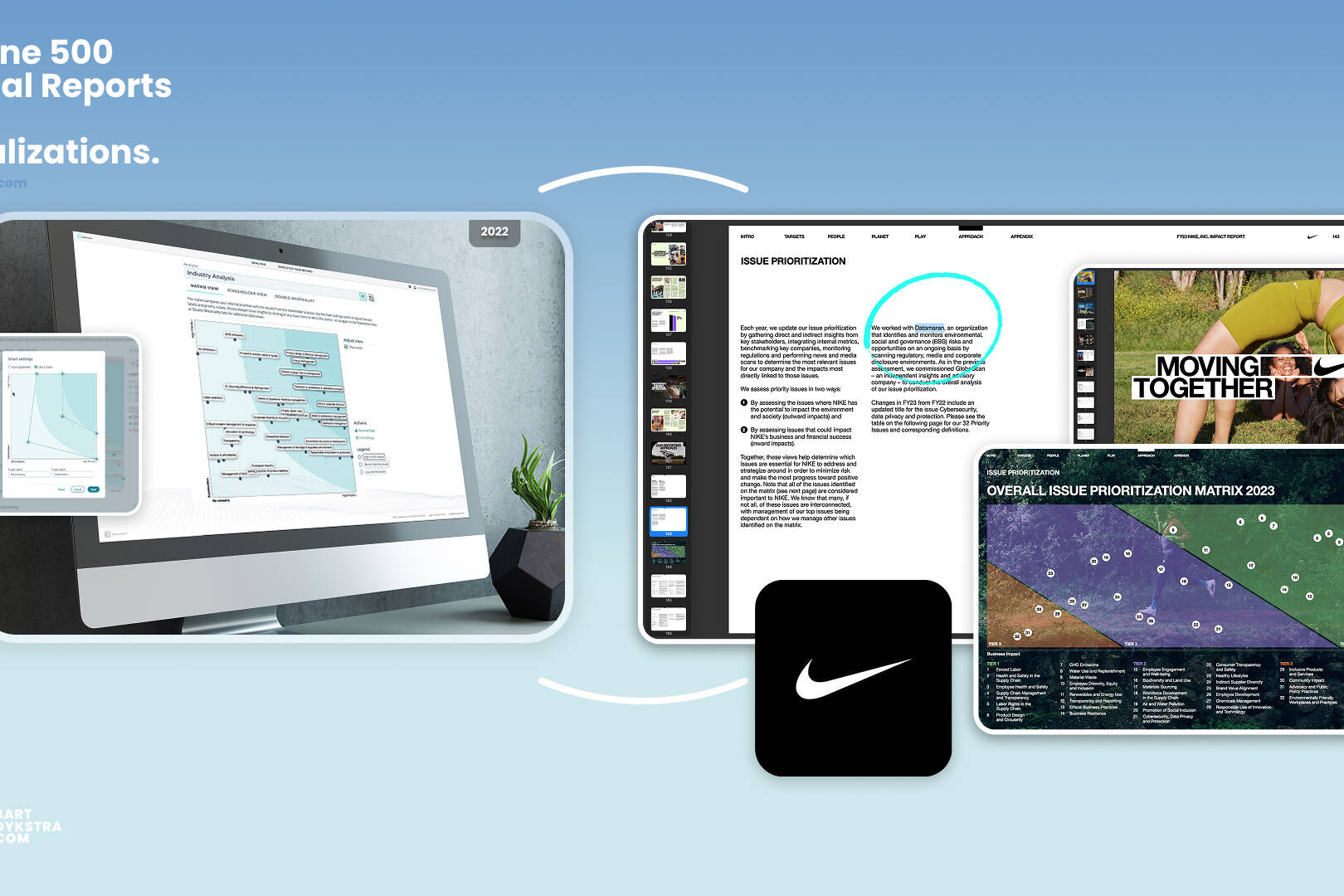
I joined Datamaran’s founding team in 2014 and built the brand from zero — inventing the name, designing the trademarked logo, and defining the identity system that still runs the company more than a decade later. That system now appears in Fortune 500 annual reports and on Nasdaq’s Times Square screens, and it sustained the brand through its growth from seed to a $33M Series C.
This is a case study in foundational design: the decisions made at the start, and why they still hold.
The name and the mark
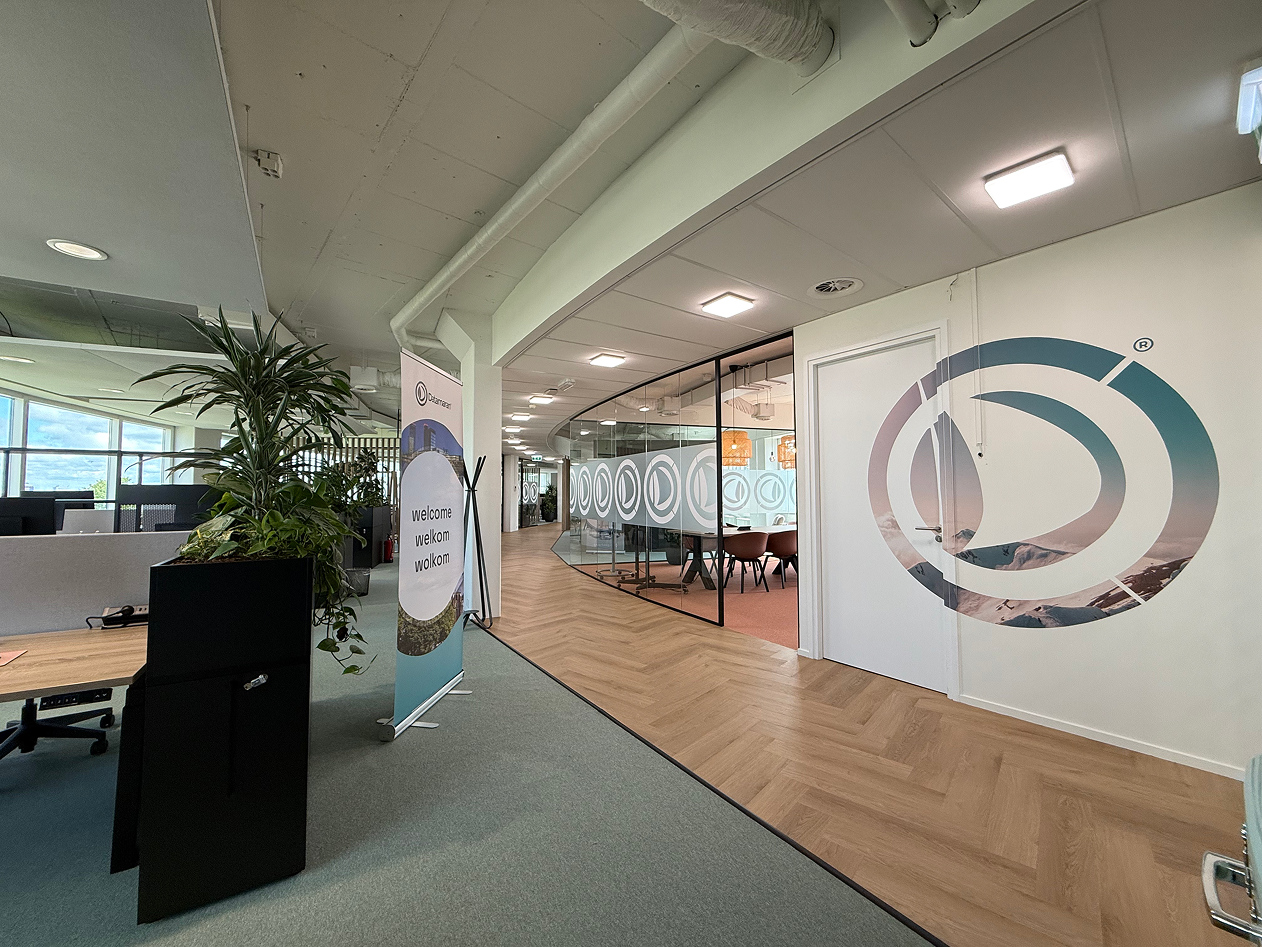
The mark: a sail rendered in negative space inside a broken infographic circle. The gap keeps it open and forward-leaning rather than enclosed — navigation, not a seal. Registered with the USPTO.
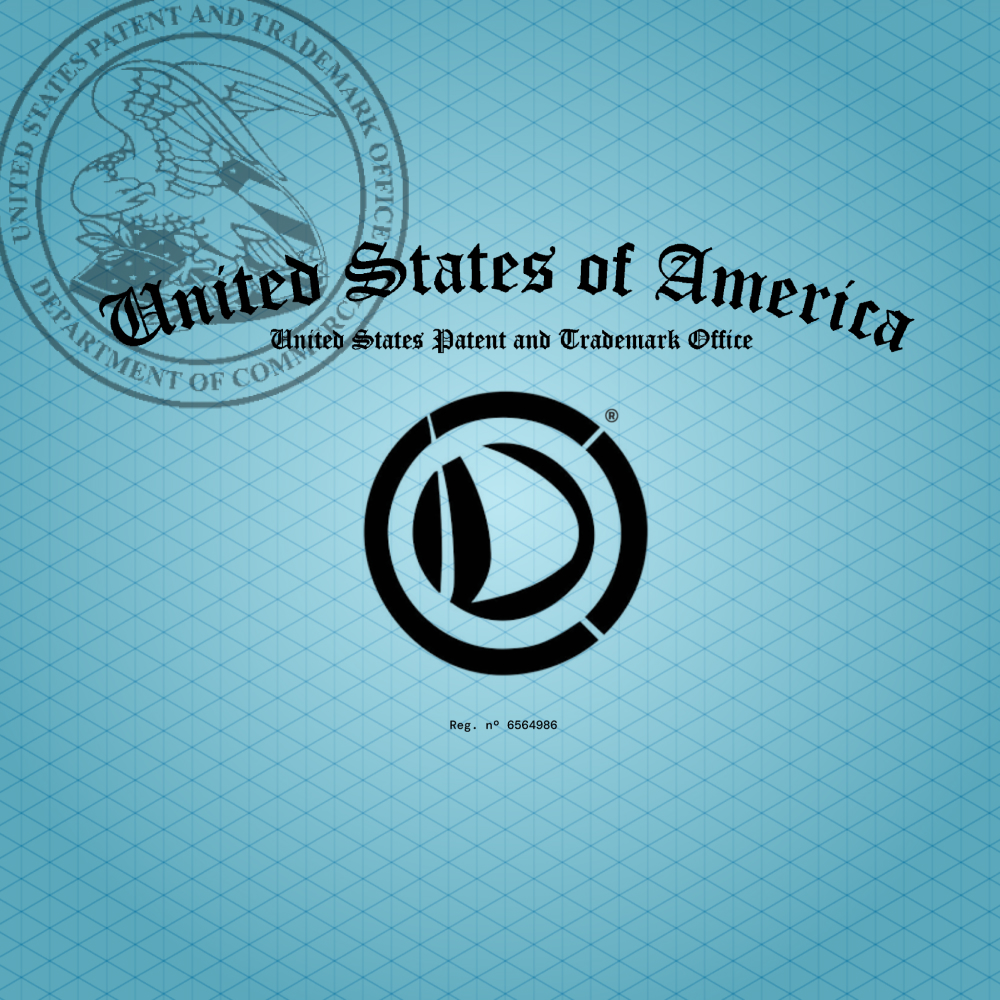
Datamaran blends data and catamaran: agile navigation through vast volumes of information. The logo turns that idea into form. A D-shaped sail held inside a broken infographic circle, the gap keeping it open and forward-leaning rather than enclosed. Navigation, not a seal. The turquoise was chosen as much for what it refused as for what it carried. Not the sector-standard green of leaves and forests, but a colour built to read as trust, clarity, and momentum, signalling a data company rather than an NGO. The concept gave the brand a single organizing metaphor, navigating data, that every later decision could be measured against. The mark is registered with the US Patent and Trademark Office, carrying the ® officially.
Built to scale across contexts
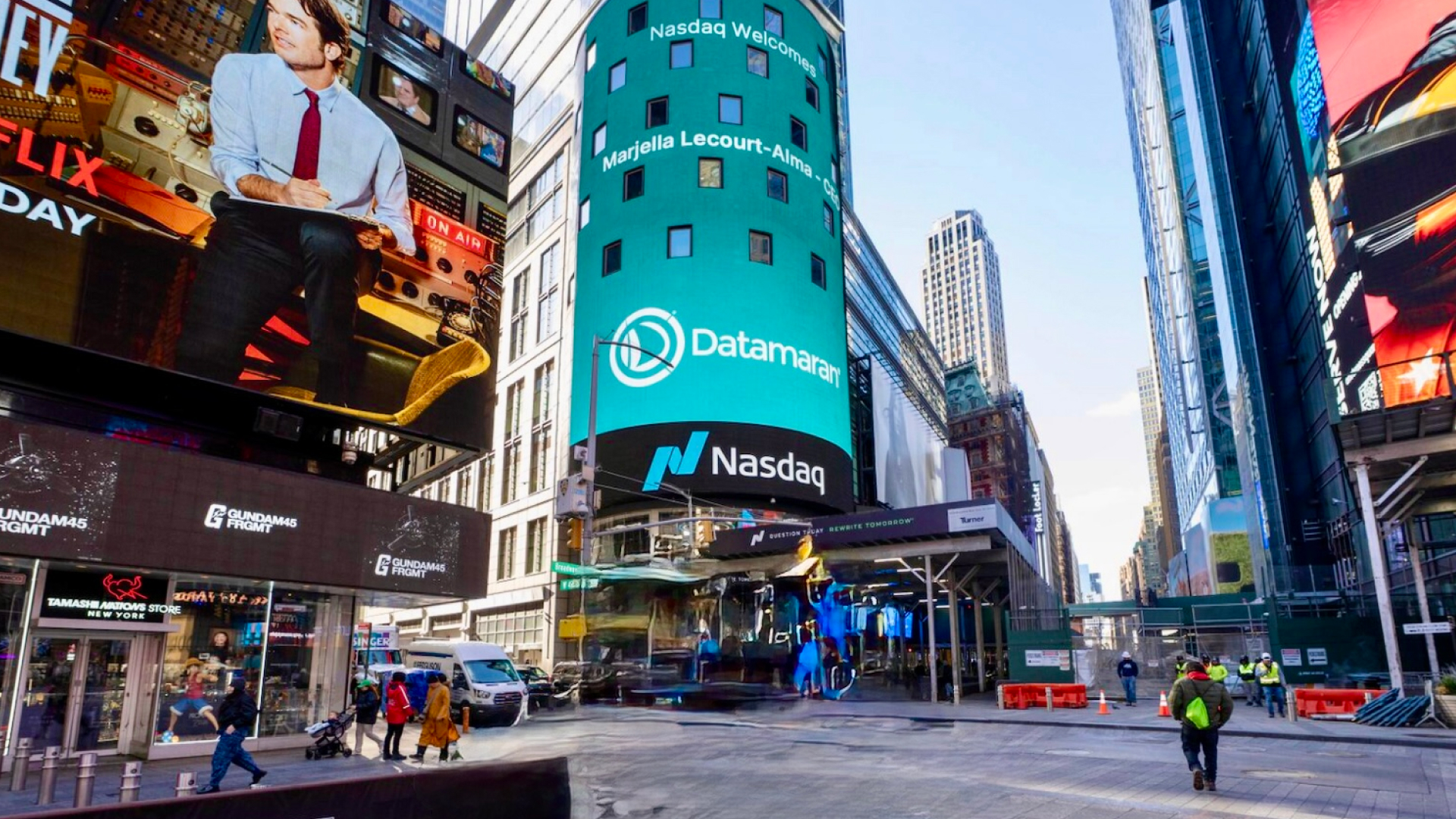
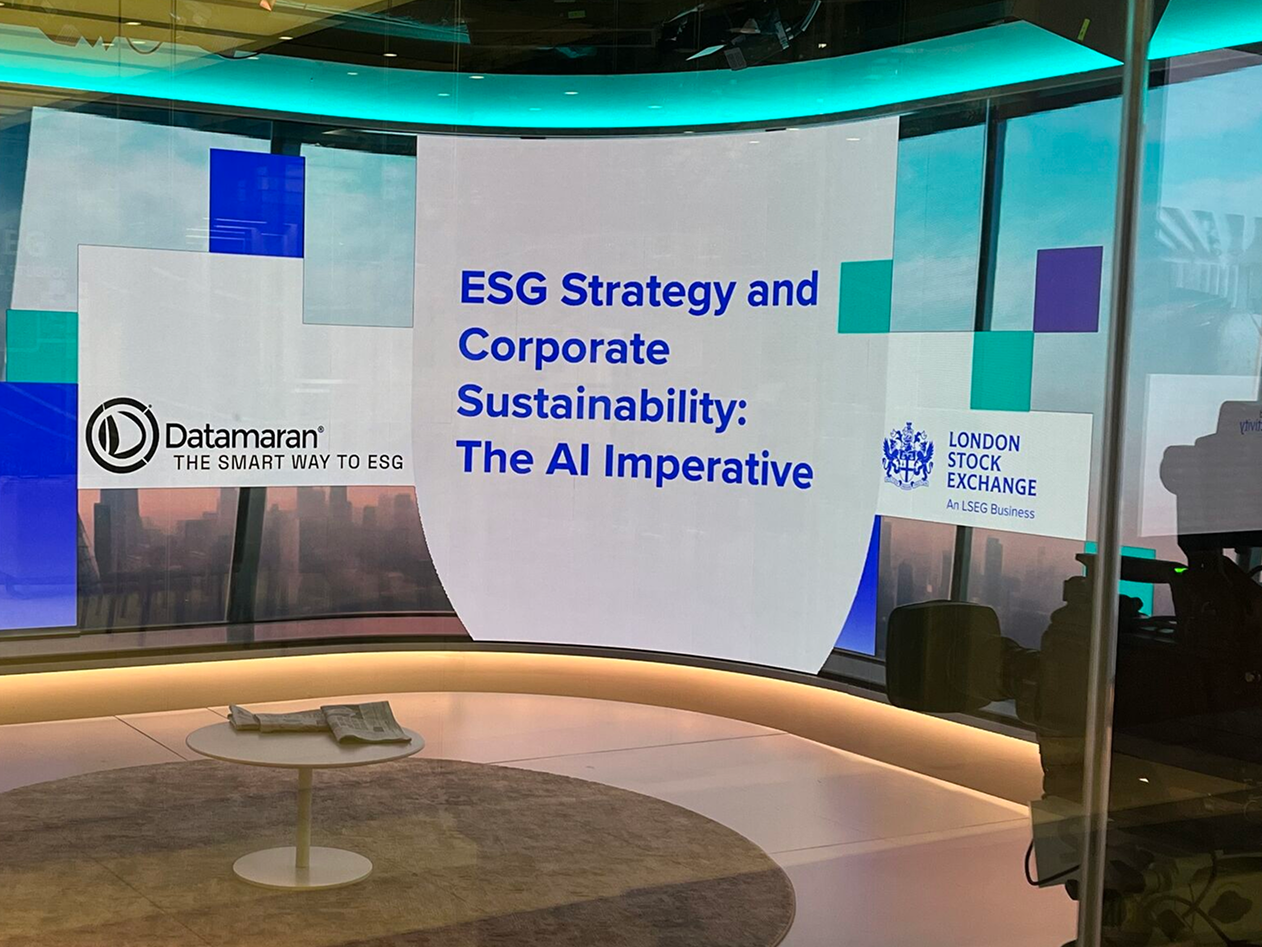
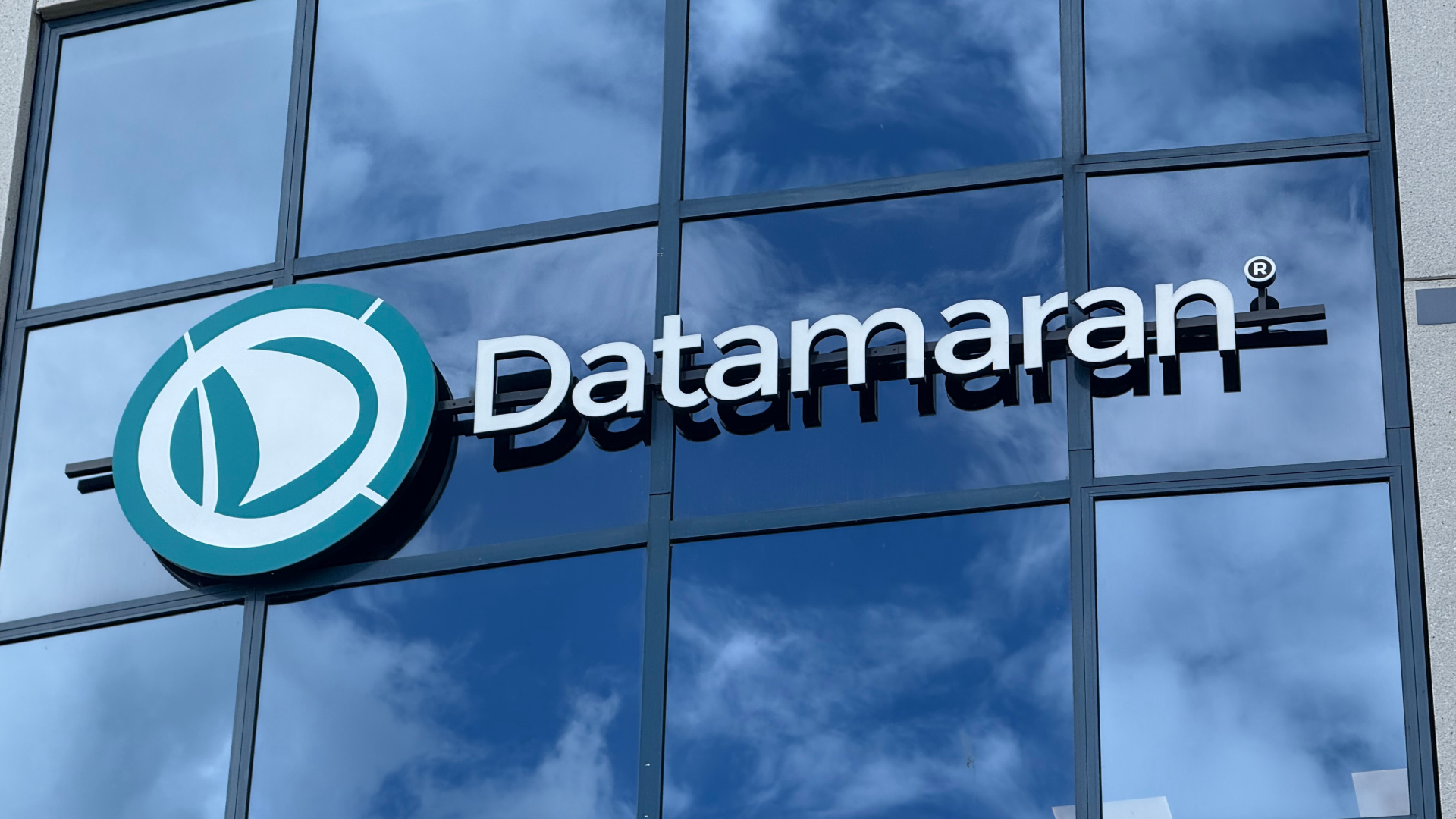
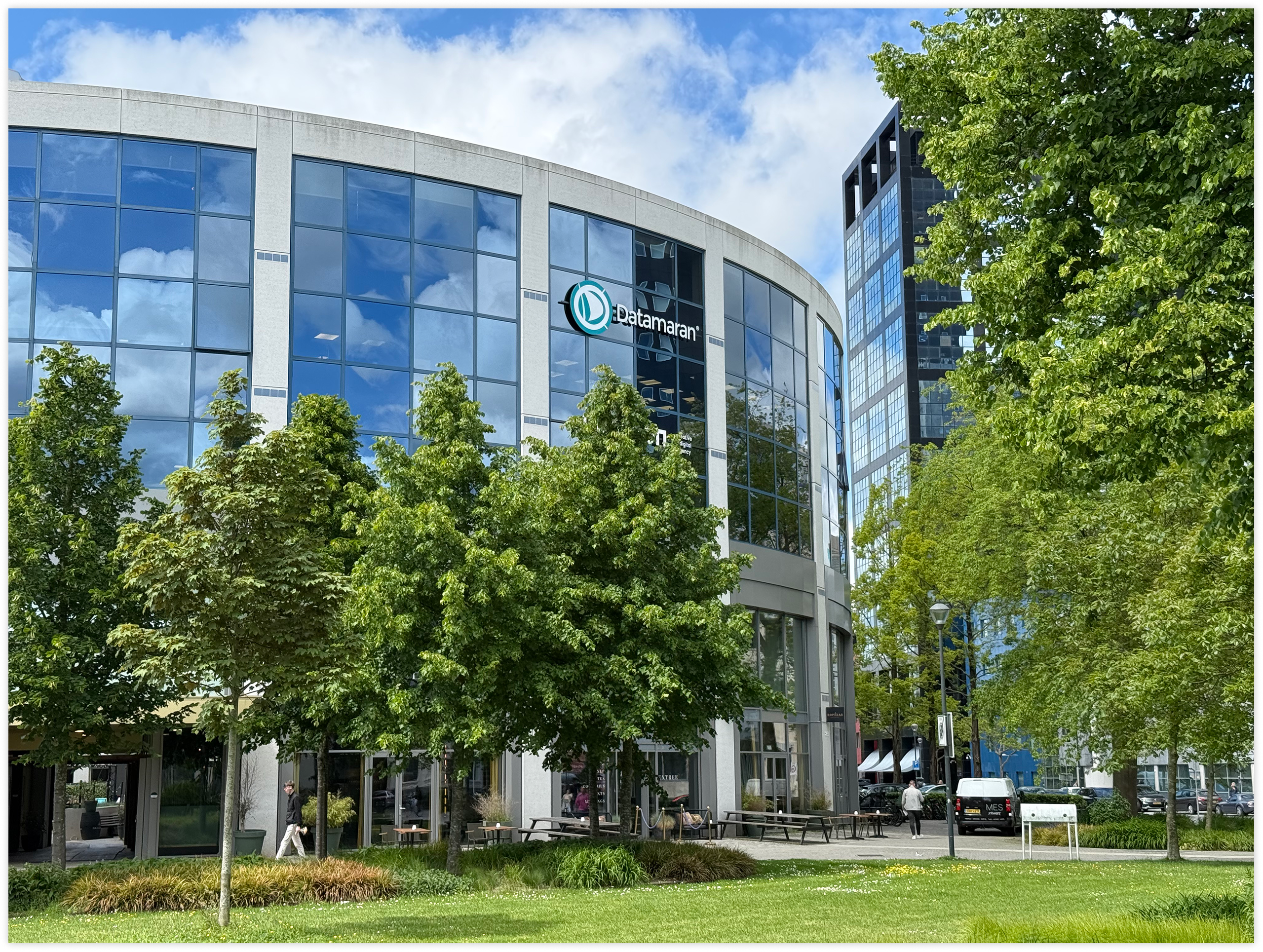
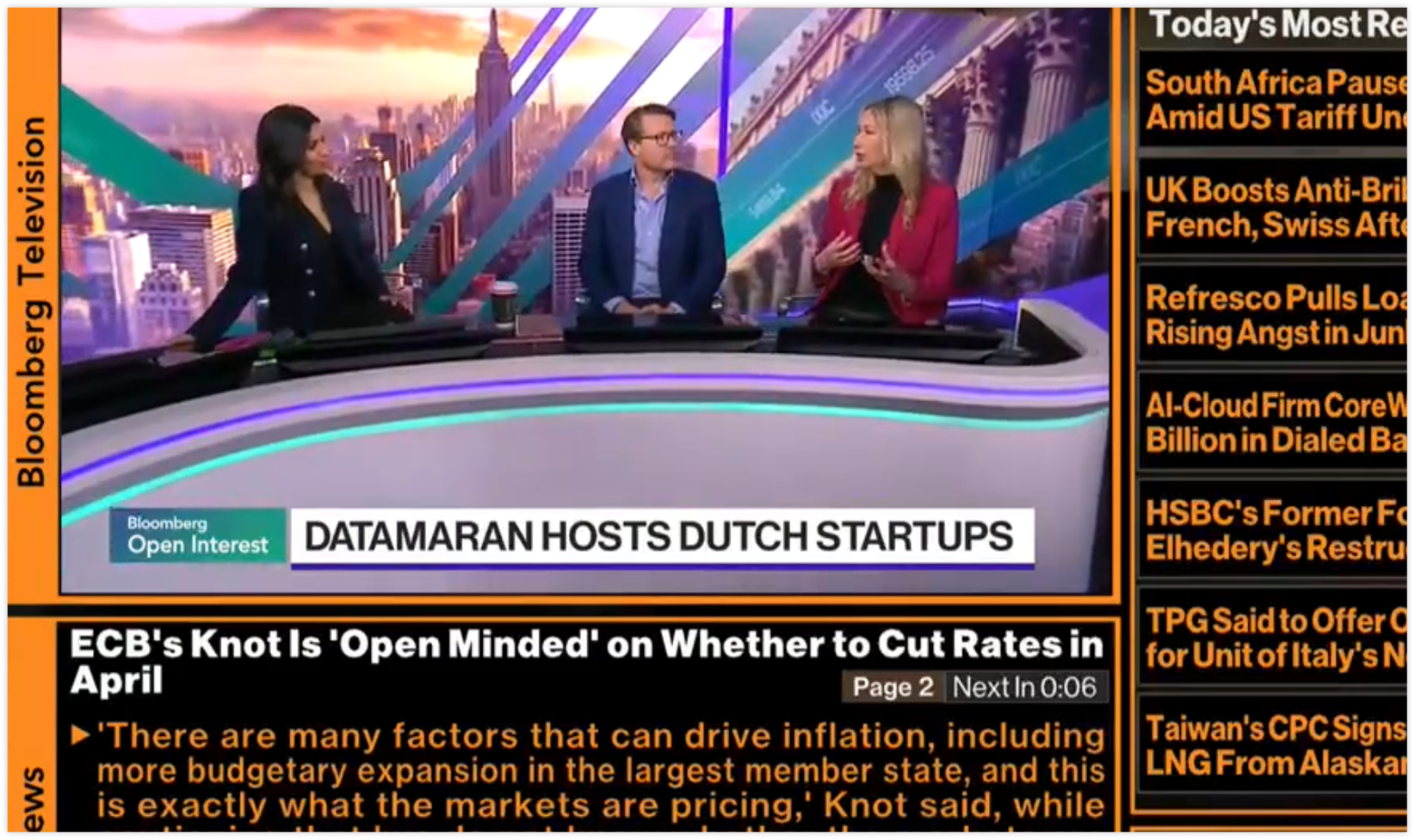
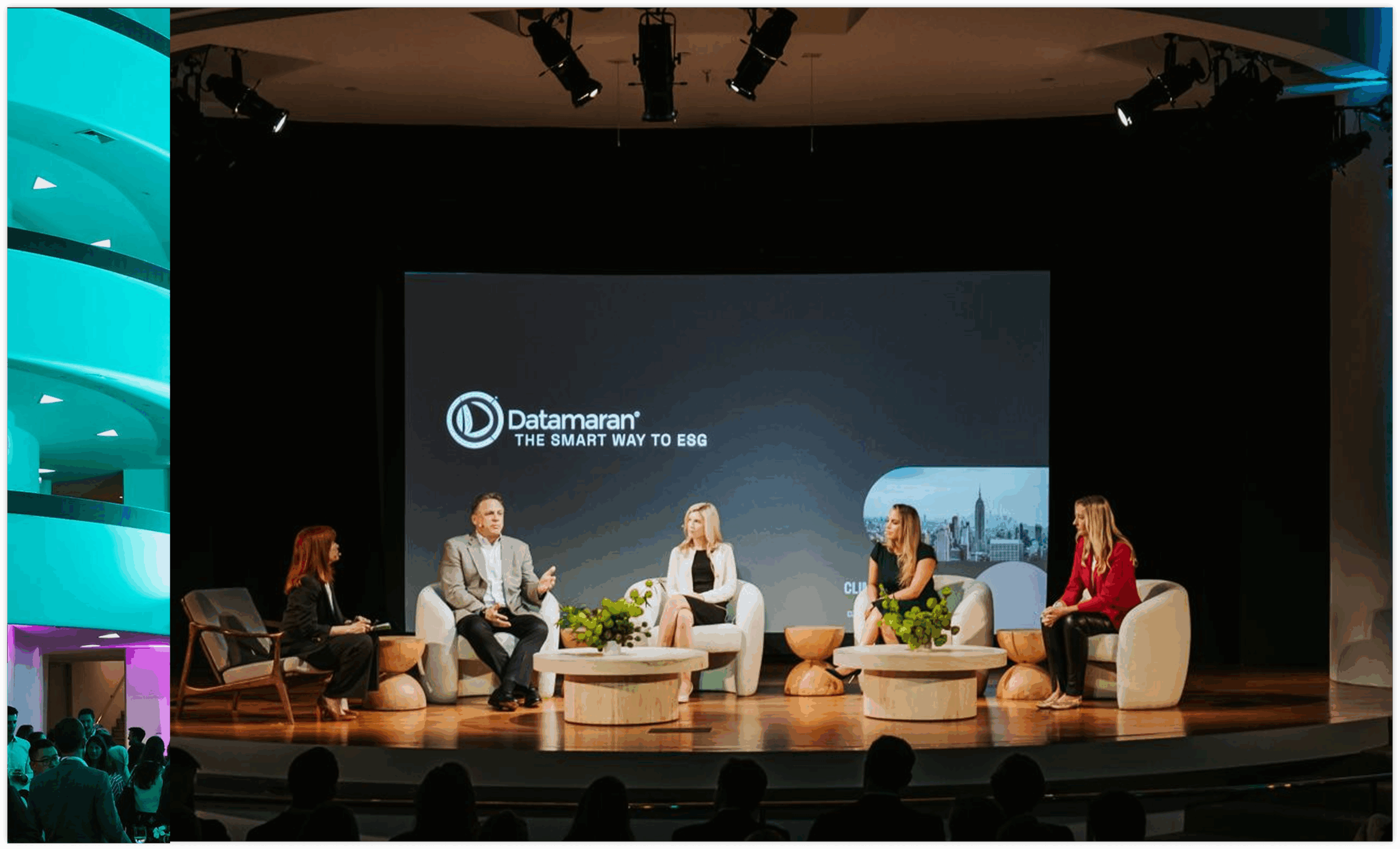
A founding-stage identity has to survive contexts you can’t predict at launch. Datamaran’s has: from the Netherlands HQ facade to Guggenheim conference stages, Bloomberg TV, the London Stock Exchange, and Nasdaq’s Times Square screens — while staying instantly recognizable at every size and surface.
That durability is the point. The system was designed once, well, and hasn’t needed reinvention to keep up.
The brand book: one identity, many jobs
The brand book exists to keep the identity consistent everywhere it appears, and, more importantly, to let it do different jobs without losing itself. Typography is the clearest example. The type evolved over time, from Montserrat in the early marketing years to Space Grotesk in the current campaigns, with Avenir as the steady companion for readability and Titillium serving the product where dense interfaces needed it.
- Montserrat with Avenir, early marketing: bold, confident, attention-first.
- Titillium, data-dense product interfaces: sharp and technical, highly readable at small sizes inside complex dashboards.
- Space Grotesk with Avenir, current campaigns: distinctive and modern, with Avenir holding readability.
Each choice solved a specific problem: scannability for dashboards, impact for campaigns, neutrality for documents. The colour system works the same way, by role rather than decoration. Turquoise is the signature, the navigational through-line from logo to dashboard to annual report. Black carries authority, white carries clarity. A small, durable set, built once, that scales from a boardroom deck to a Times Square screen.
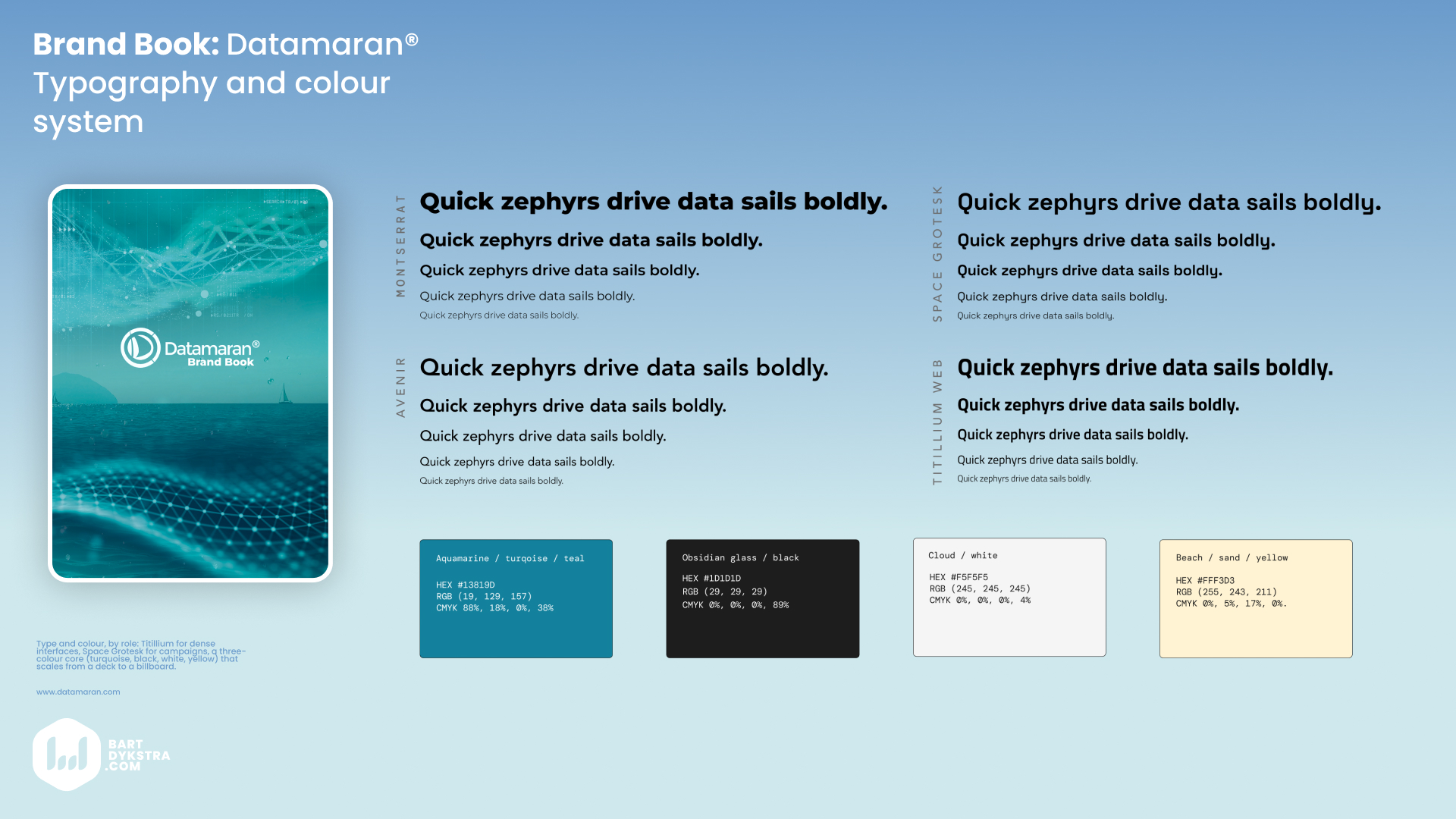
Type and colour, by role: Titillium for dense interfaces, Space Grotesk for campaigns, a three-colour core (turquoise, black, white) that scales from a deck to a billboard.
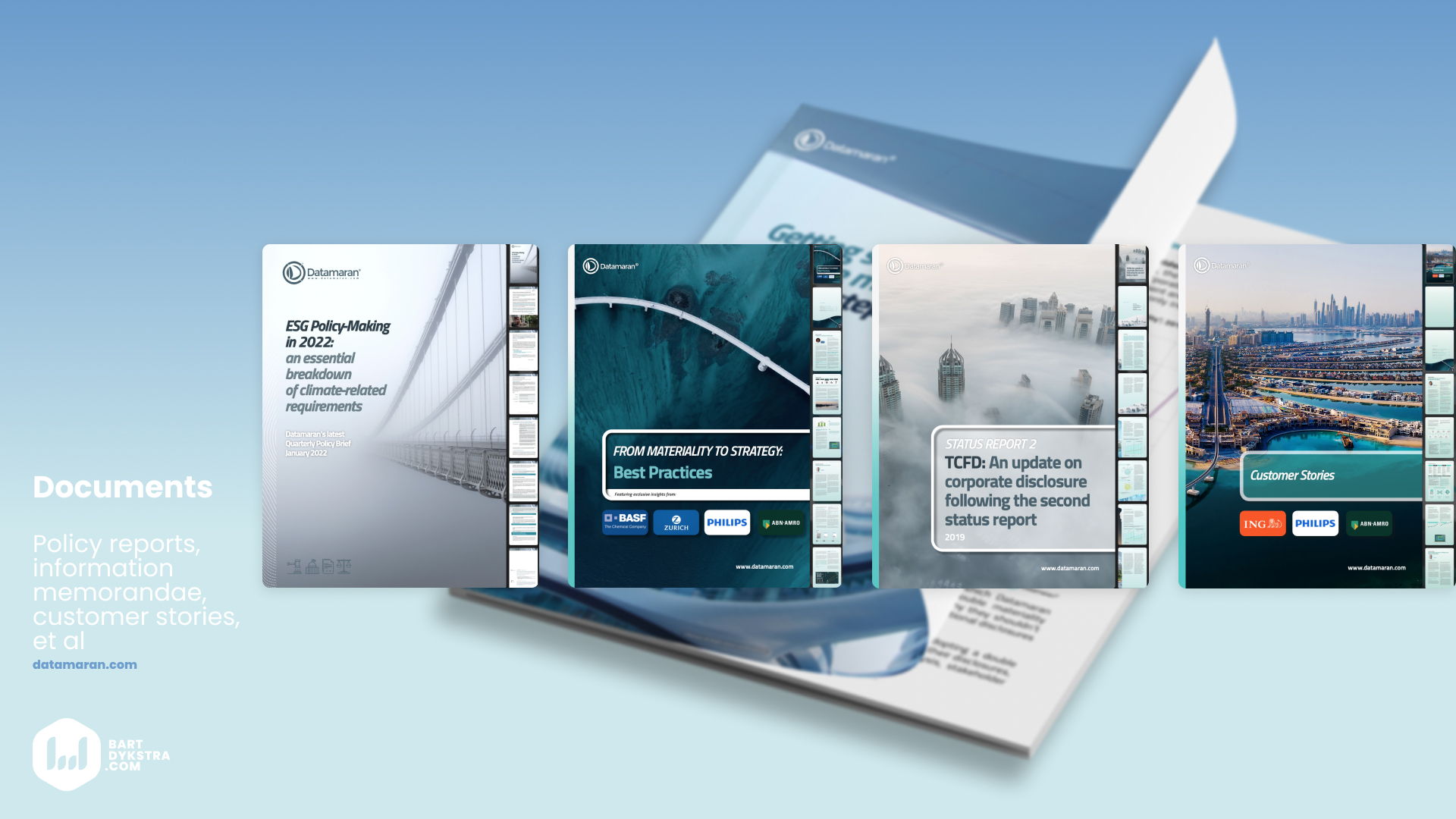
Documents and publications including data visualisations resonating the brand ID throughout.
A 360° system, including the product
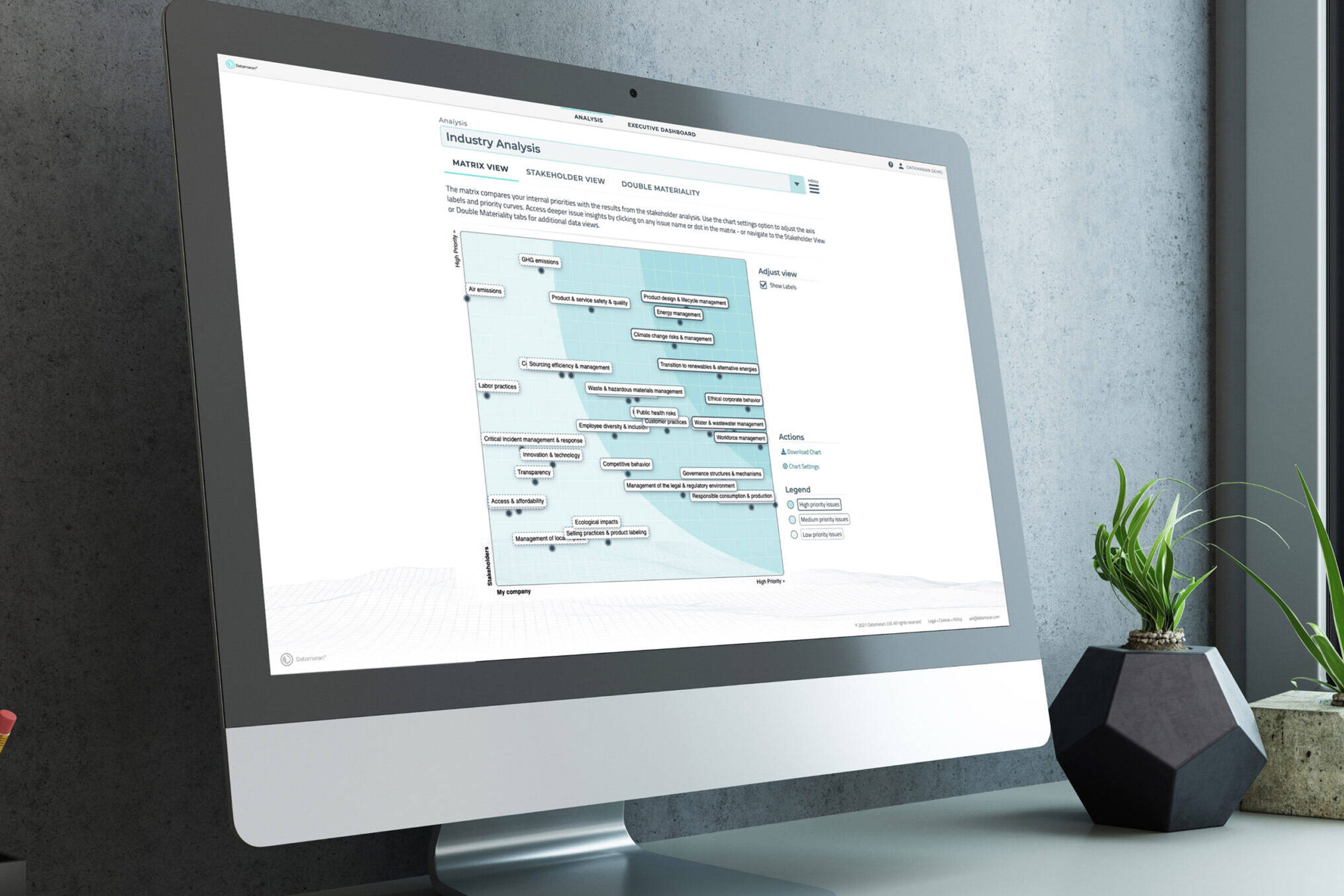
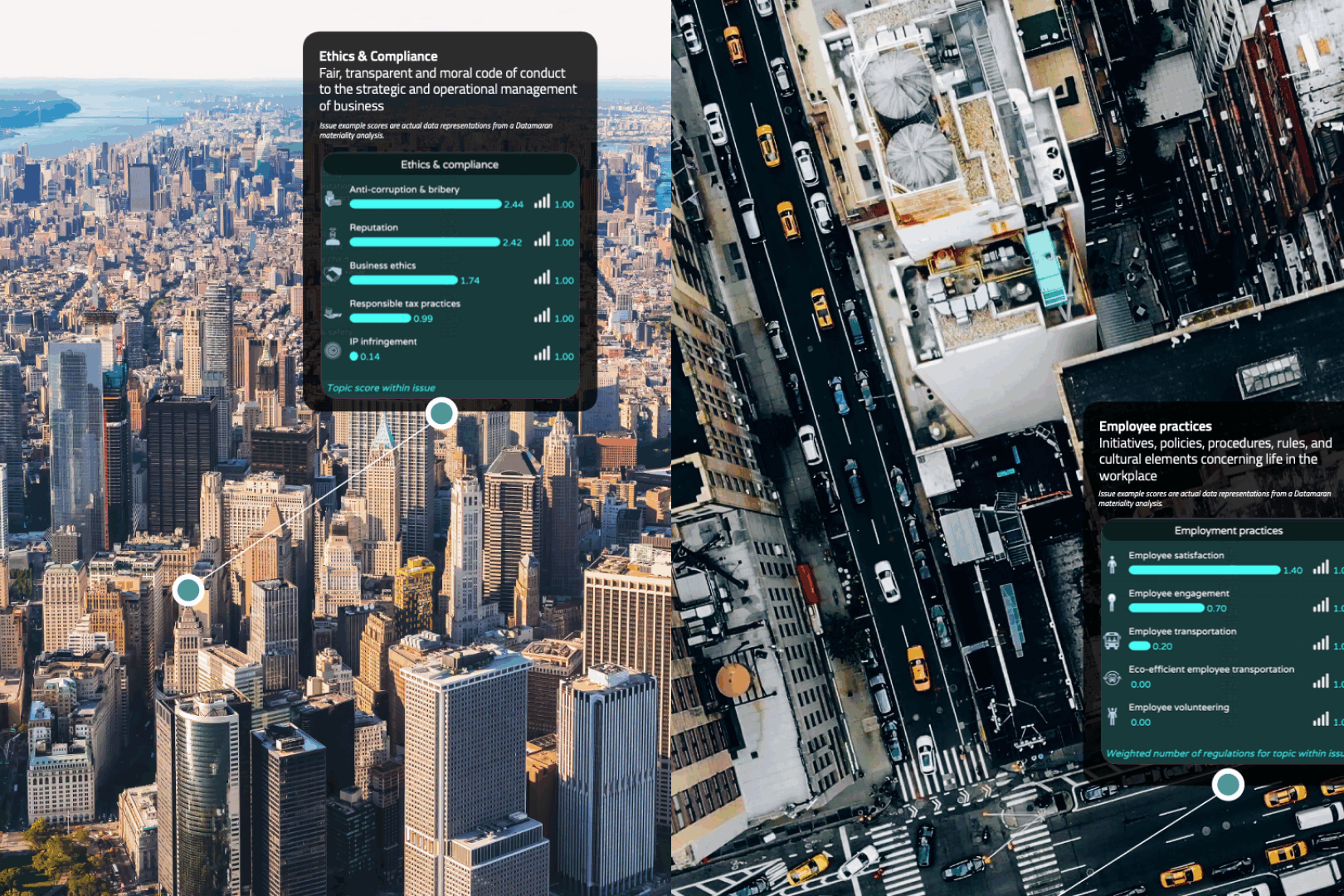
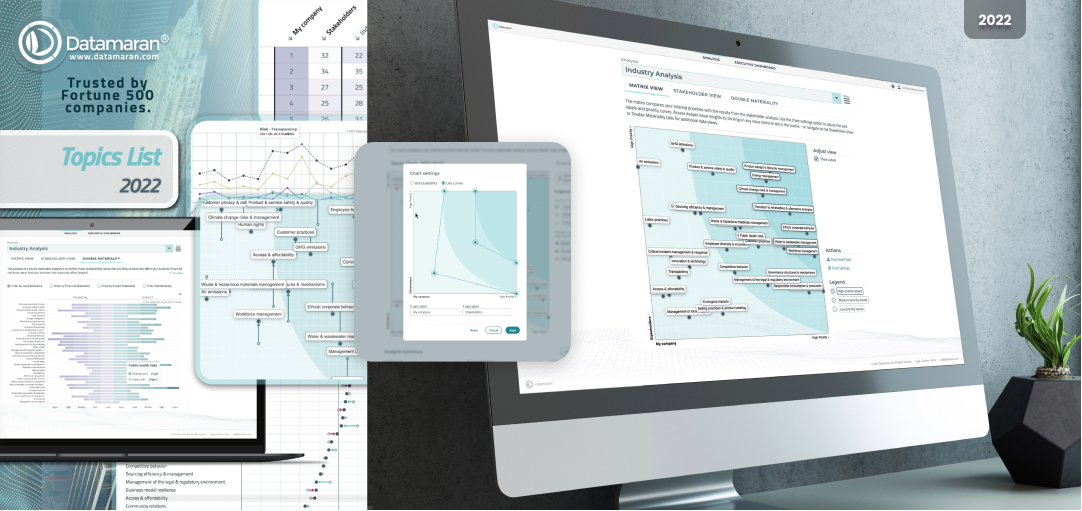
The identity runs across print, social, corporate documentation, investor materials, and, critically, into the product UX itself. The same visual language a Datamaran employee sees on opening their laptop is the one their clients publish in public annual reports through Datamaran’s data visualizations. One system, consistent from internal tooling to public-facing output.
That through-line where brand and product speaking the same language, is what makes it a 360° identity rather than a logo with guidelines attached.
Designed once, still holding.
The decisions made in 2014 were never reopened. The name, the mark, the turquoise, the refusal of the green cliché. They carried the company from a startup idea through a $33M Series C to Nasdaq’s Times Square screens, and they still frame a company now described as the market leader in AI-powered risk and governance. That is the test of foundational design: not whether it looks good at launch, but whether it is still load-bearing a decade later. This one is.
See how the Product (and Brand) shaped up during 5 platform generations:
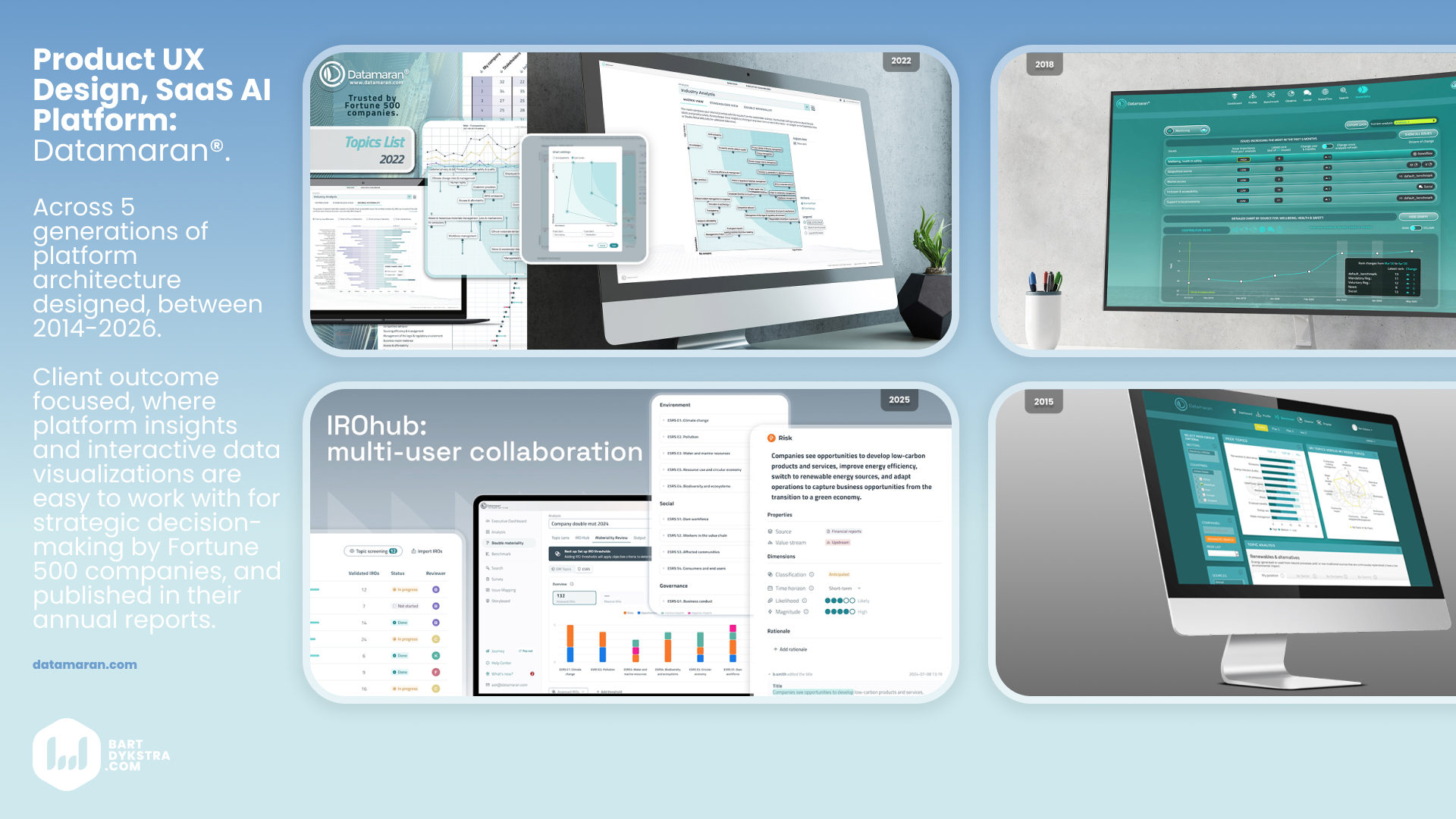
B2B SaaS | AI-Tech Insights Platform
Digital Product & UX
Complex data made legible. Led product UX across 5 generations of AI-native platform, turning ESG, risk, regulatory complexity into interfaces used by Fortune 500 leaders in Annual Reports