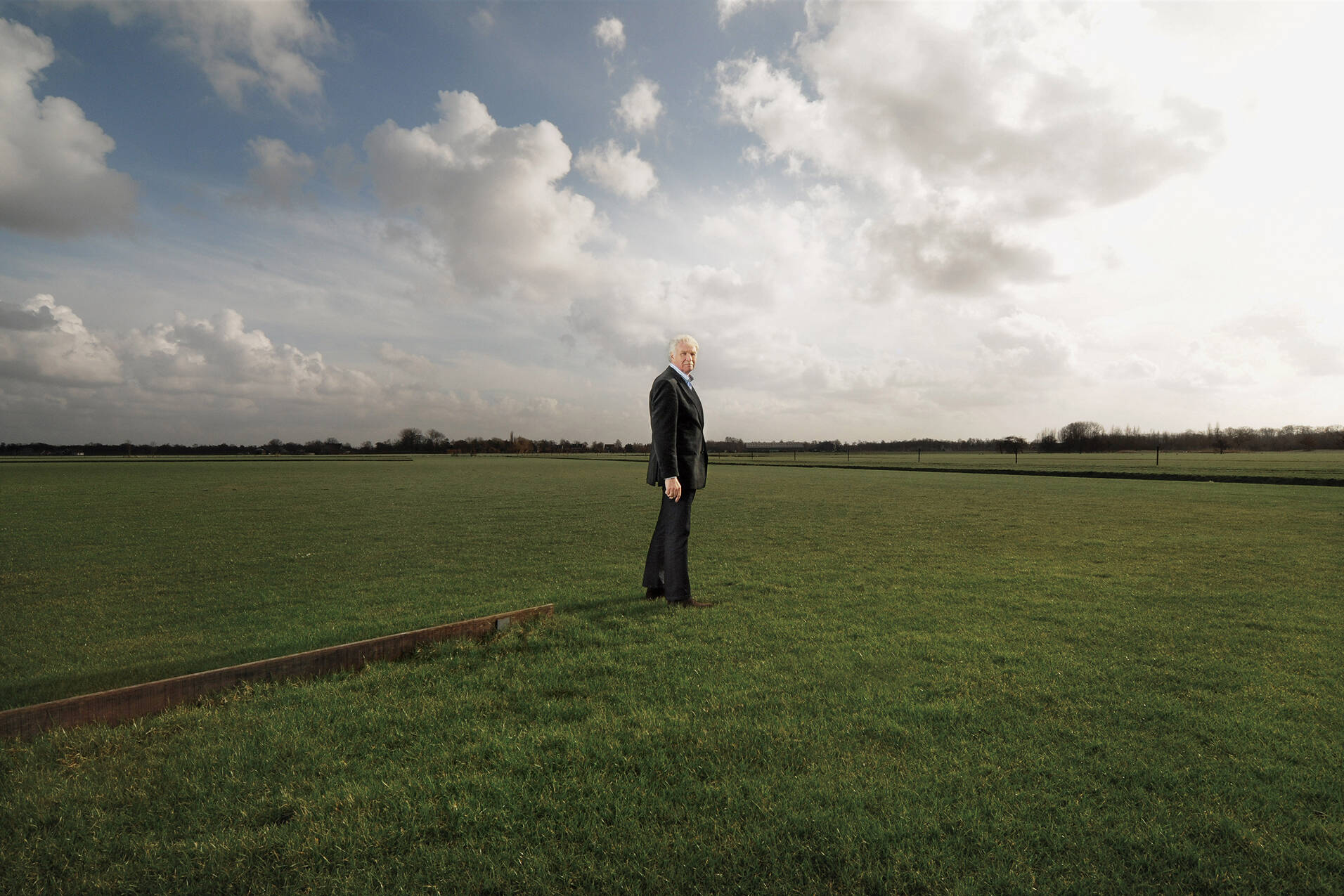

Leadership & Innovation
Designing Trust, Not Just Tech
ClientDatamaranServicesLeadership & Innovation, Product UX Design, Branding, Product MarketingYear2014-2026
Designing the Architecture of Trust: Leading Human‑Centred AI Systems
Summary
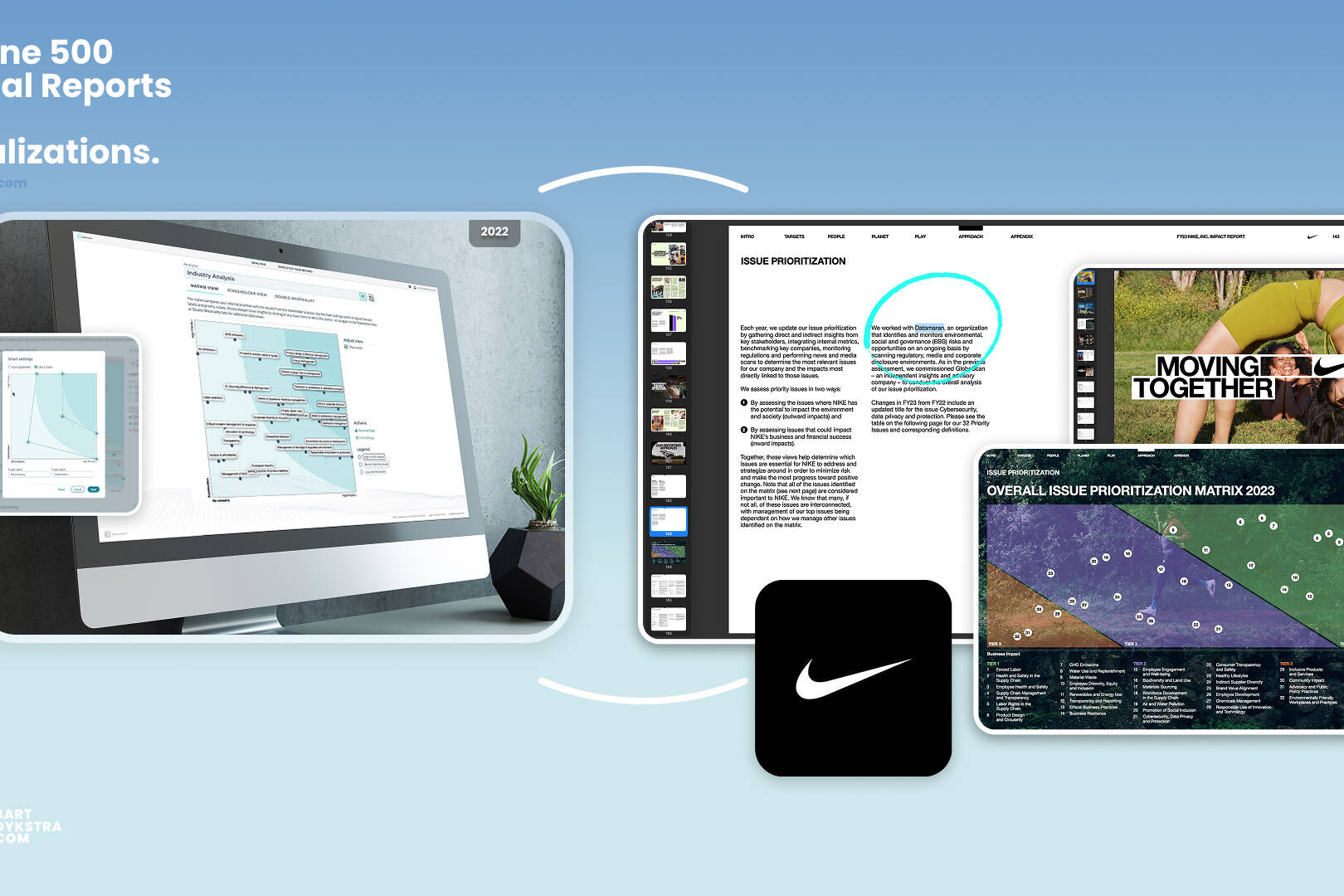
I led the design and creative direction of a complex ESG SaaS platform, scaling multidisciplinary teams and shaping a culture where design, data, and AI work together to build trust, accelerate decision‑making, and create coherent brand experiences, from product dashboards and AI‑driven interfaces to Fortune 500 Annual Reports.
My work sits at the intersection of product, brand, and organisational culture: growing a design function from a handful of product designers into a team of product designers, UX researchers, marketing designers, and even early‑adopting prompt engineers, while introducing design‑driven rituals like design workshops, design weeks, hackathons, and global forums that helped align product, tech, and business thinking across offices in Valencia, New York, London, and the Netherlands, ultimately contributing to the company’s growth and a Series C investment of $30m from Morgan Stanley.
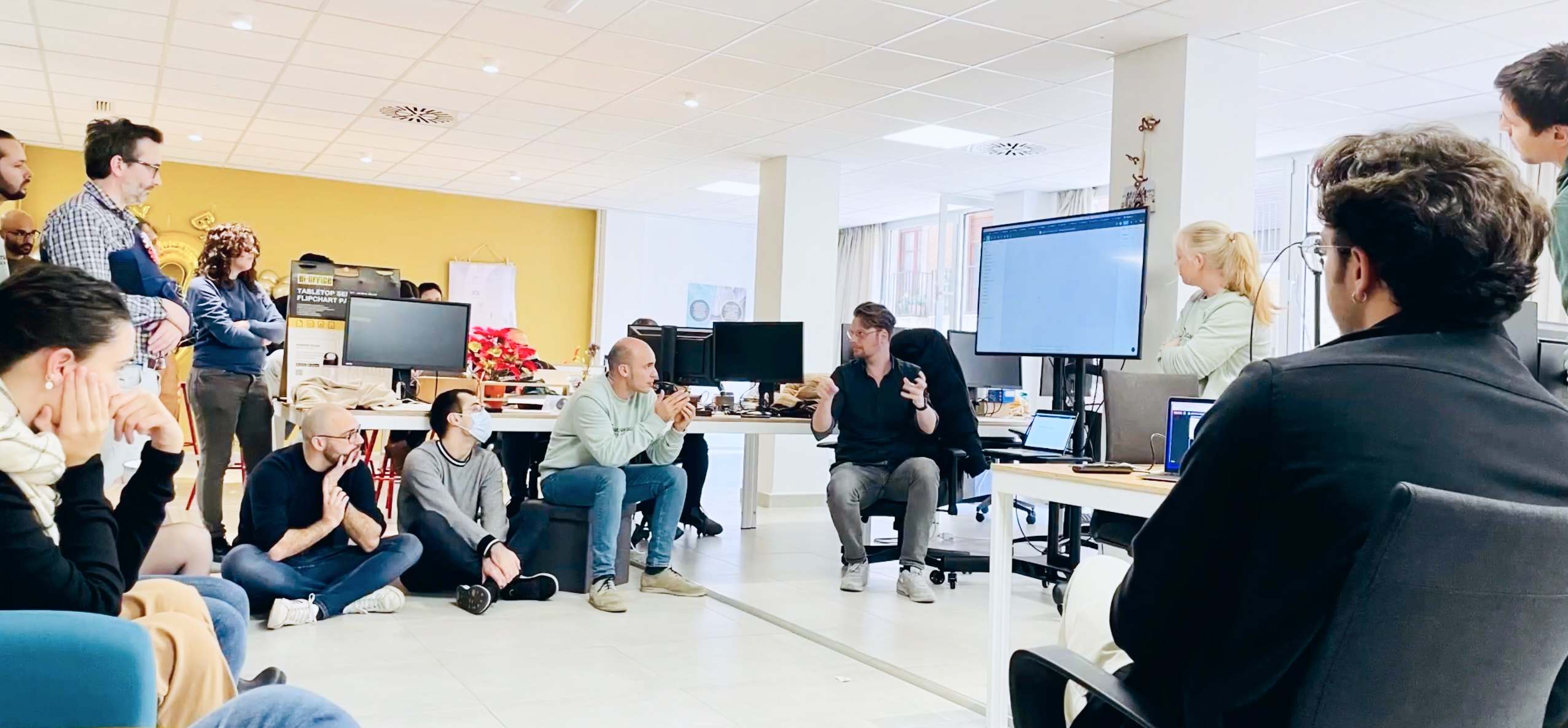
During a product/engineering/design discovery week applying Agile methodologies
Designing decision‑driven experiences
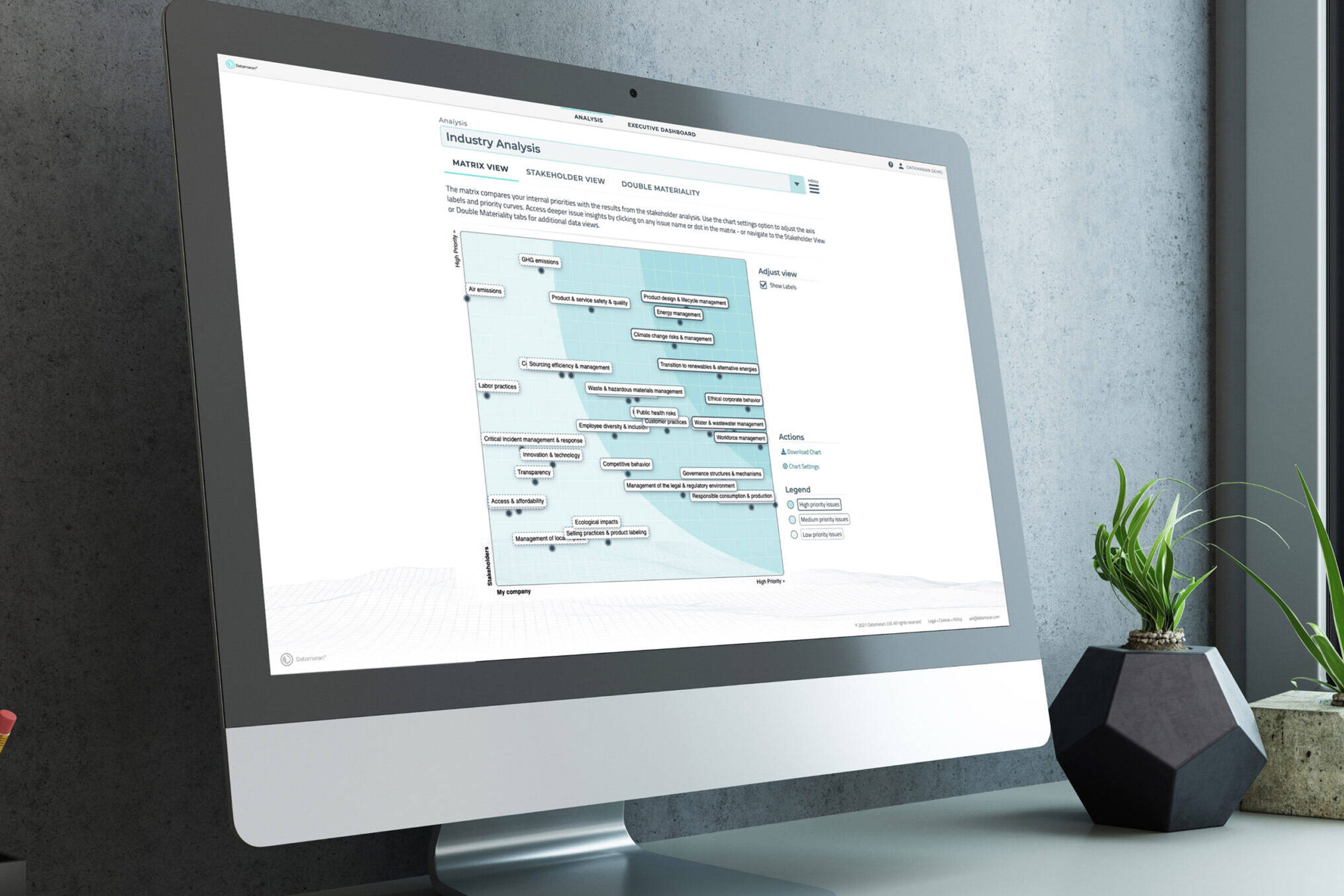
My approach to product, brand, and creative direction grew from leading a multidisciplinary design function at Datamaran, where I turned complex ESG data into intuitive, human‑centred SaaS experiences. I shaped the end‑to‑end product, working closely with product and engineering teams to align interfaces, data, and narratives with real‑world decision‑making for risk, sustainability, and executive leaders. That experience taught me to treat design as the connective tissue between business, technology, and user needs, ensuring the platform not only worked but felt reliable and coherent across contexts.
From real-world navigation systems to sustainability value‑driven storytelling
Before Datamaran, I worked at TomTom (navigation technology), where I gained experience in UX testing and the production of marketing content, helping bridge what users actually needed and how the product was presented to the market. This period sharpened my understanding of how design, testing, and storytelling intersect to create trustworthy experiences, a mindset I later carried into the way I approached SaaS product and brand work. That same sensibility showed up in how I produced product demos that were later used in company events, ultimately appearing on big screens even during high‑profile showcases at the Guggenheim Museum.
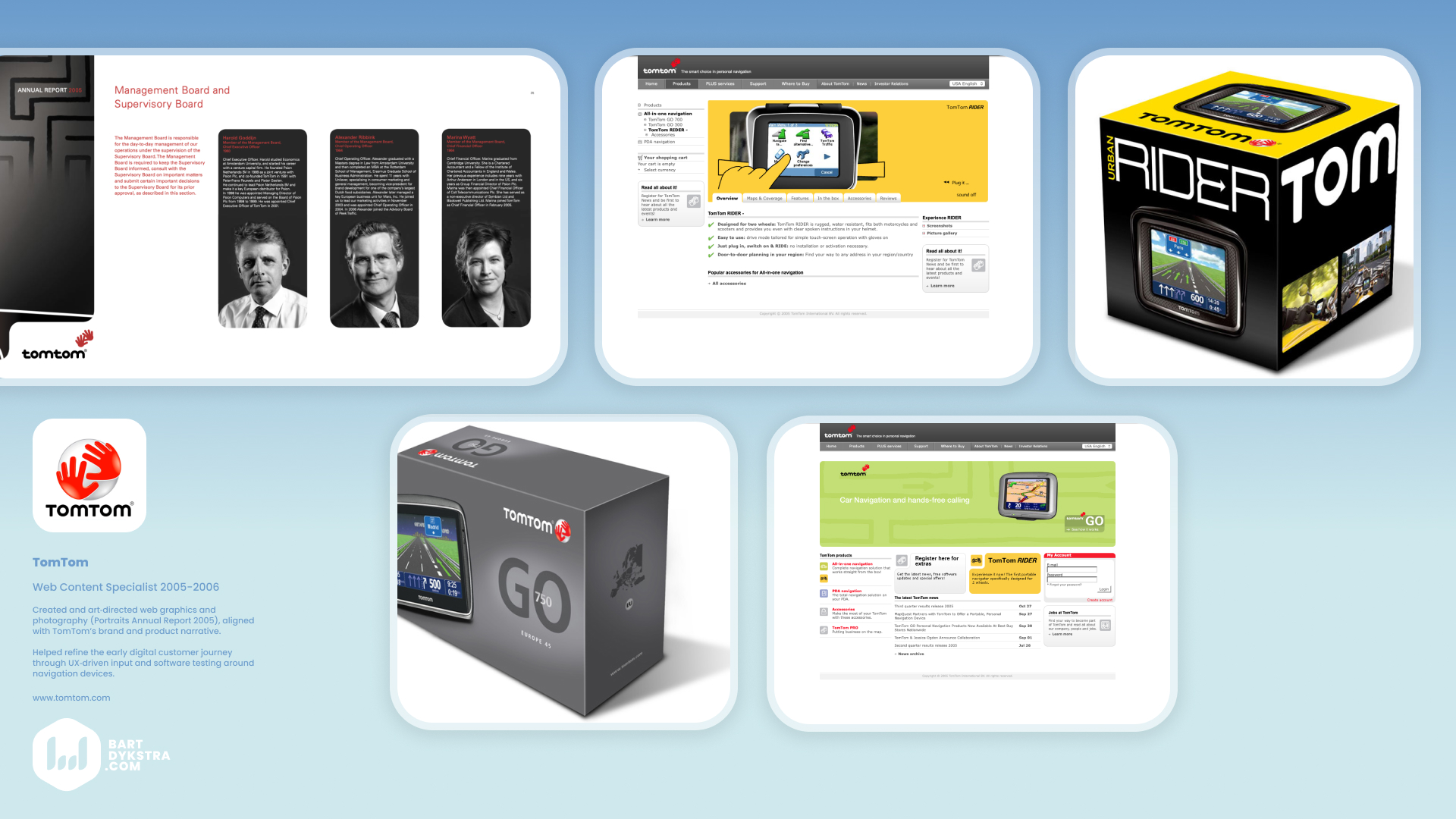
From UX testing, web content, and annual report 2005 board members portrait photography at navigation technology company TomTom…
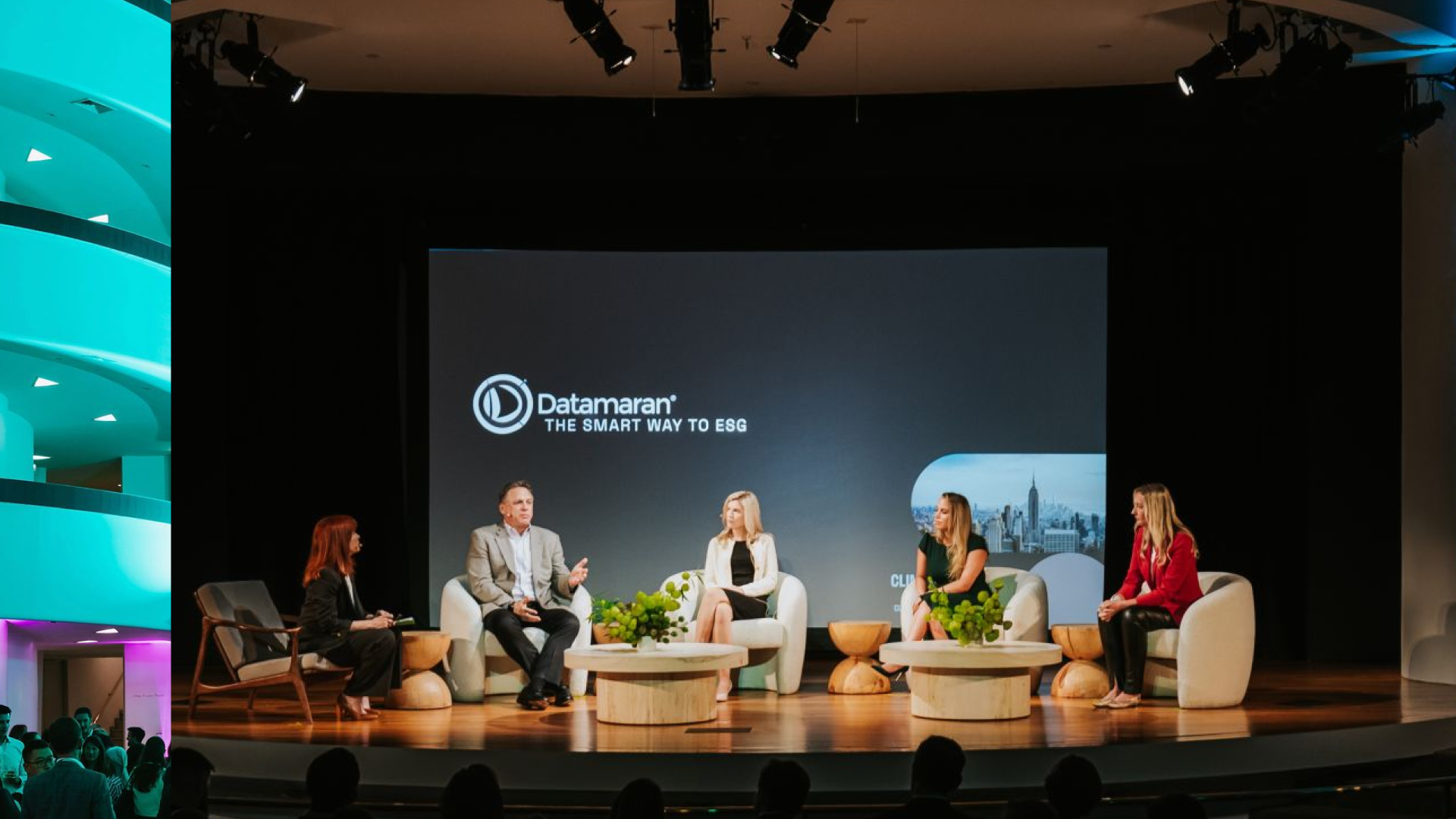
…to brand identity design and product UX showcase at the Solomon R. Guggenheim Museum in New York City, 2024.
Scaling teams and culture
During Datamaran’s startup years, I led the expansion of the Valencia office from a small team of four to around forty people, working closely with the CTO to build out product, tech, and design teams that spanned engineering, data science, UX, and brand, not limited to customer success or HR. Within the design function itself, I grew the team from a handful of product designers into a fully fledged group including several product designers, UX researchers, marketing designers, and even the company’s first copywriters who later evolved into prompt engineers as large language models began taking flight. I helped shape hiring practices, career ladders, and rituals that allowed these teams to grow without losing their product‑centred mindset. This people‑focused leadership, paired with cross‑functional in‑house branding across Valencia, New York, London, and the Netherlands, helped align how the company showed up externally with how it operated internally.
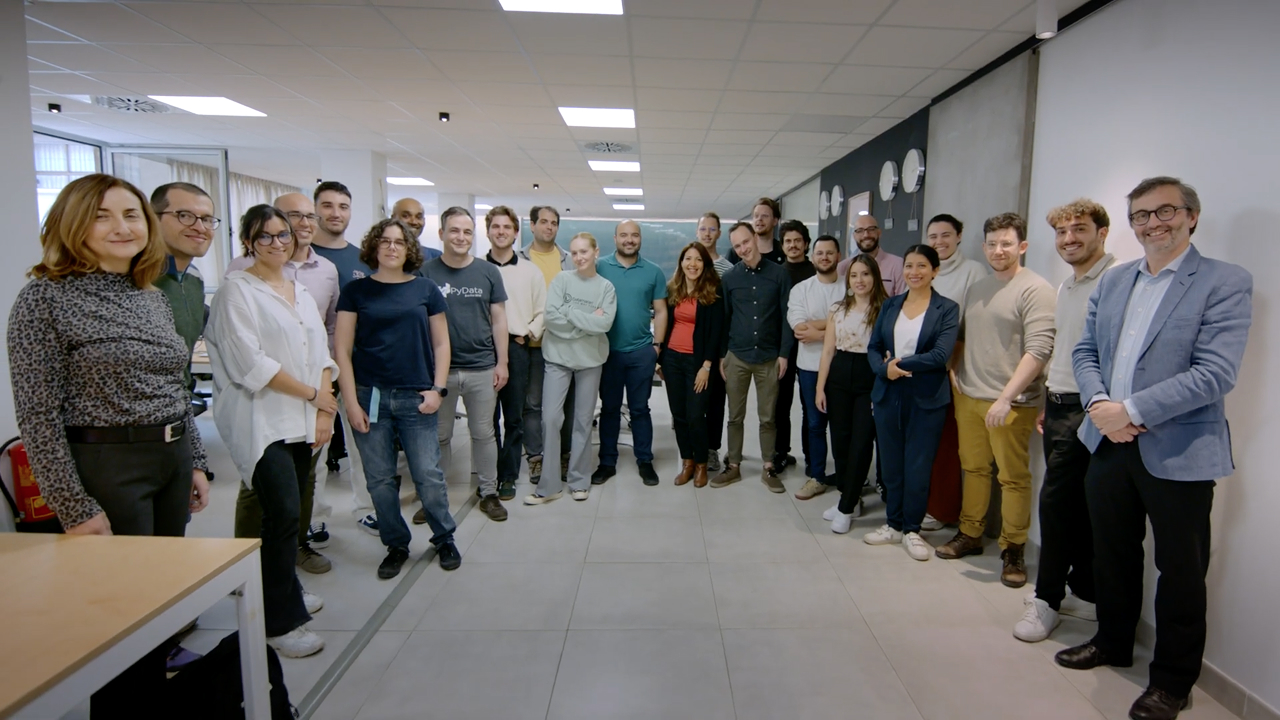
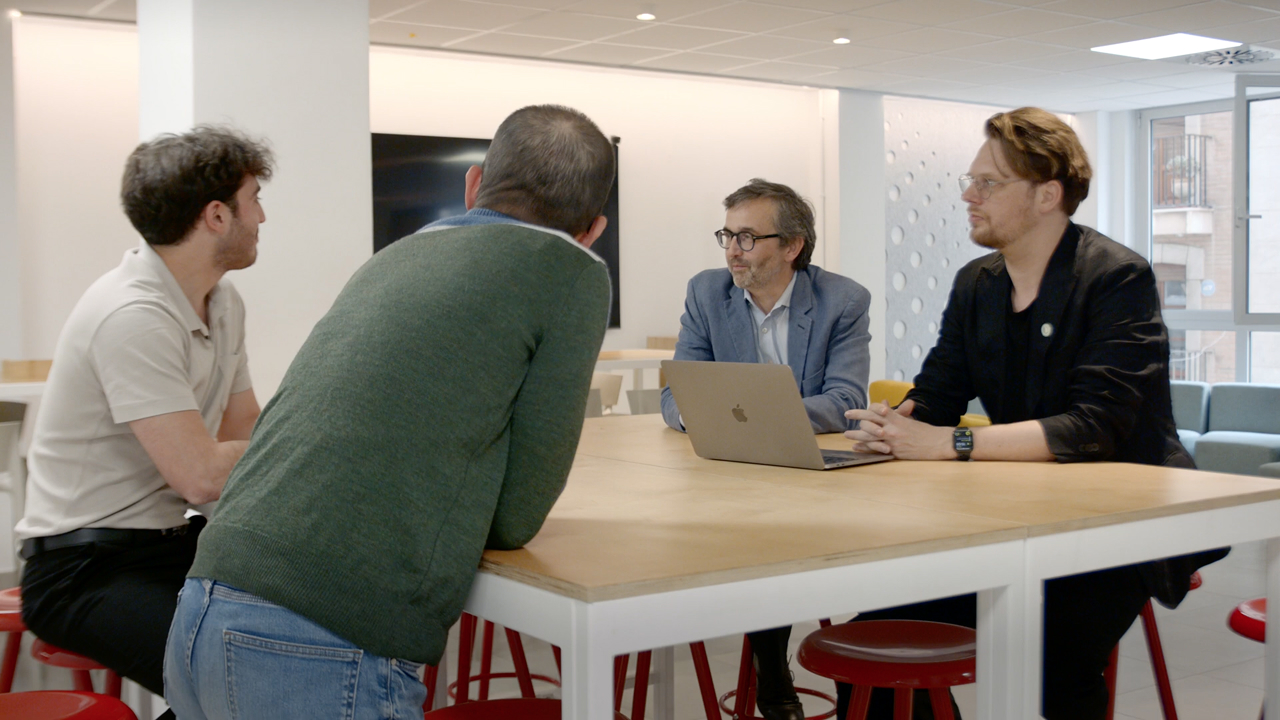
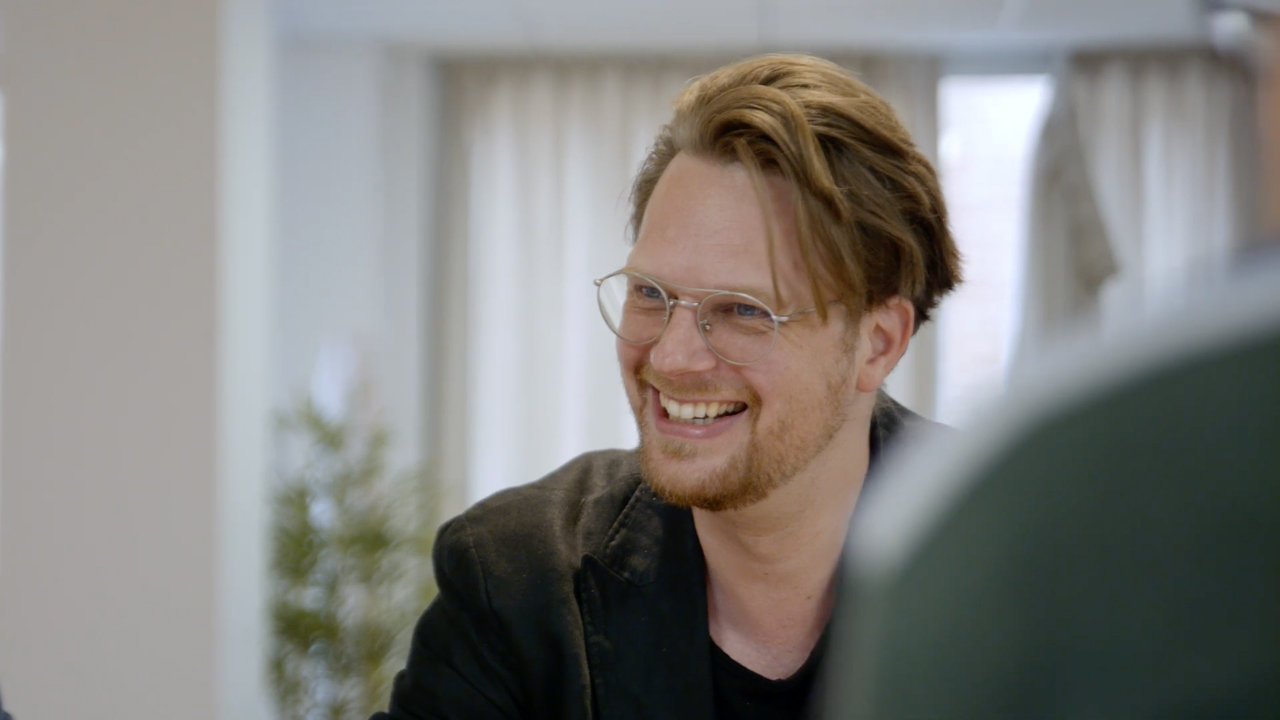
Worked directly with Co-founders to build a Valencia/Spain remote based product team from 4 to ~60.
Innovation that scales impact
During my time at Datamaran, I came to see innovation as designing systems people could lean on, not just systems they clicked through. One concrete discovery led to a new process: with the rise of AI, vibe-coding and MCP connectors paved the way for a new way of rapid prototyping that became a core part of our workflow, consistently saving the equivalent of three days within each two‑week sprint. When applied across roughly 20 sprints per year and four product teams, this added up to around 2,000 hours saved annually, reinvested into deeper problem‑solving, user research, and higher‑value work that directly benefited clients.
Core Collaboration Applications
- Figma/Figma MCP
- Cursor
- Bolt.new
- Clickup/Jira
- Hotjar
- Useberry
- Mixpanel
- Notion
- Loom
- Slack
- Screenstudio
- Adobe Creative Suite
- Blender
- SVGator
- Lottie
- Vite
- Node.js
- Python
- Vue
- React
- Linear
- Hubspot
- Grafana
- Salesforce
Design‑driven collaboration rituals
I also led design workshops, design weeks, and company retreats together with the Agile team, using these formats to align product, design, and engineering around shared problems, rituals, and outcomes. Hackathons became recurring innovation events where engineers, designers, and product people could experiment freely, test ideas, and surface solutions that later fed into the core roadmap. These activities turned collaboration and experimentation into visible rhythms of how the organisation worked, not one‑off perks.
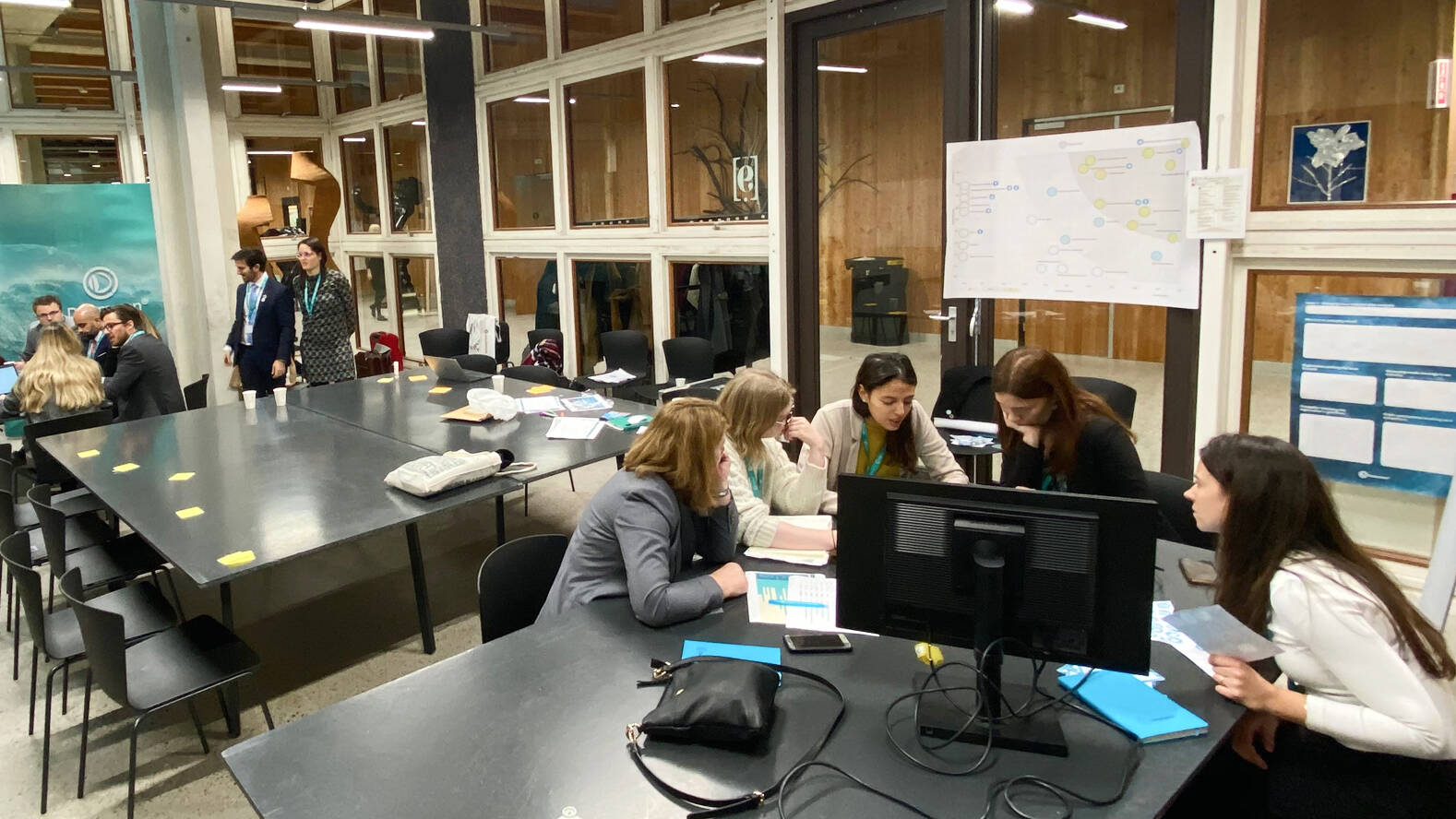
User Forums organised on location in Amsterdam, Phoenix, New York, have been instrumental in listening to the clients’ voice to directly shape the product’s UX.
Trust as the core UX layer
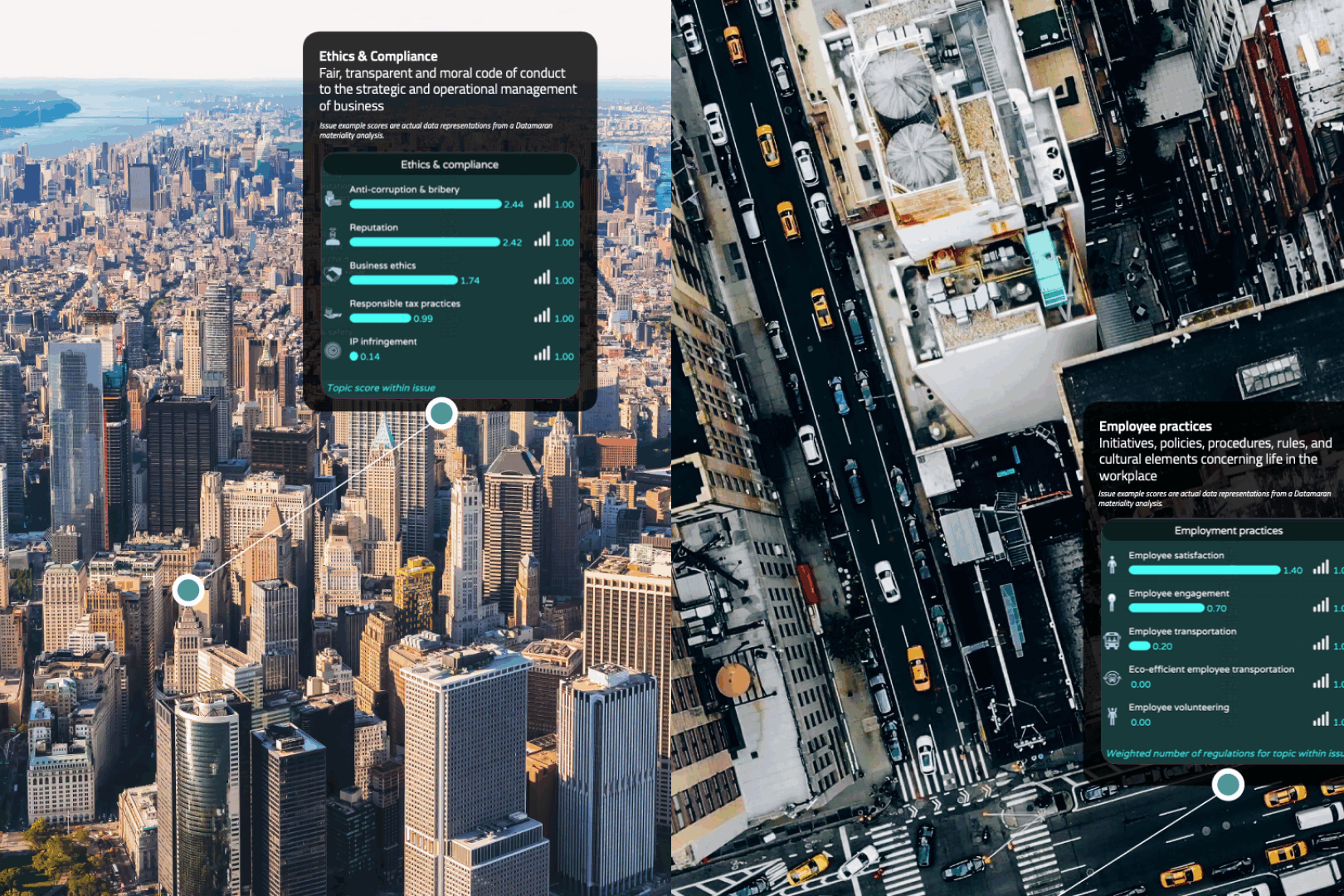
I also came to see UX less as a matter of ease of use or visual polish and more as designing and orchestrating layers of trust between the user, the system, and the outcomes it promised. I approached product, design and client success as the architecture of trust, carefully structuring how people interacted with data, automation, and AI such that they felt confident in what the system knew, why it suggested certain actions, and how it evolved over time. This meant transparent patterns, clear escalation paths, and fallback behaviors that let users understand AI‑driven recommendations, not just accept them.
Human+AI Design
Ultimately, Human+AI designing cannot truly happen without great people like the exceptional Datamaran design team: sourced locally from Valencia’s vibrant creative talent pool and perfectly aligned with their mission to sync craft and AI for innovative brand experiences. In their SaaS operations, they continue to amplify creative thinking across engineering, product, and marketing through empathy-driven collaboration and scalable visual systems, turning these complex challenges into intuitive, user-resonant solutions that only human ingenuity can inspire.
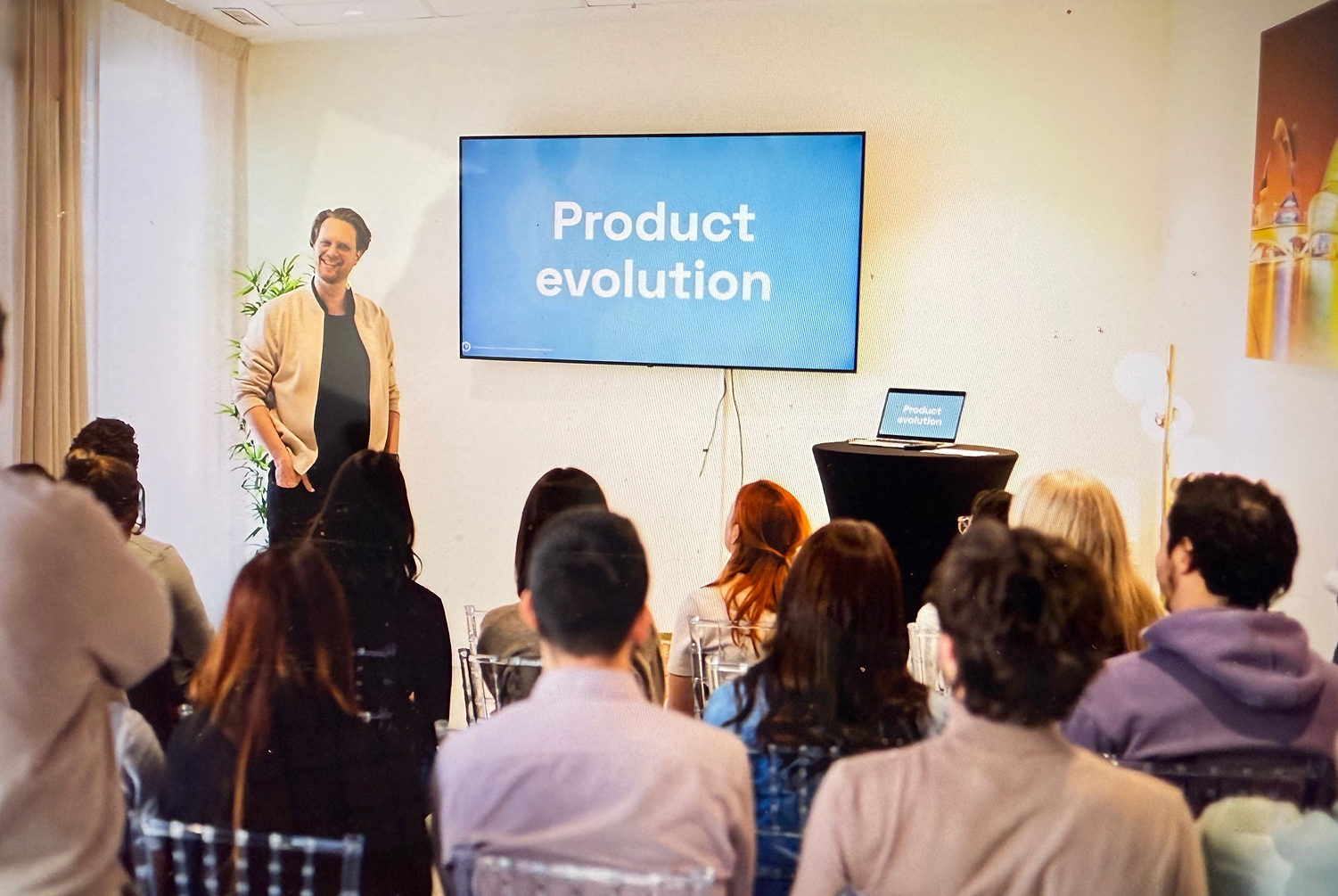
Public speaking on product evolution.
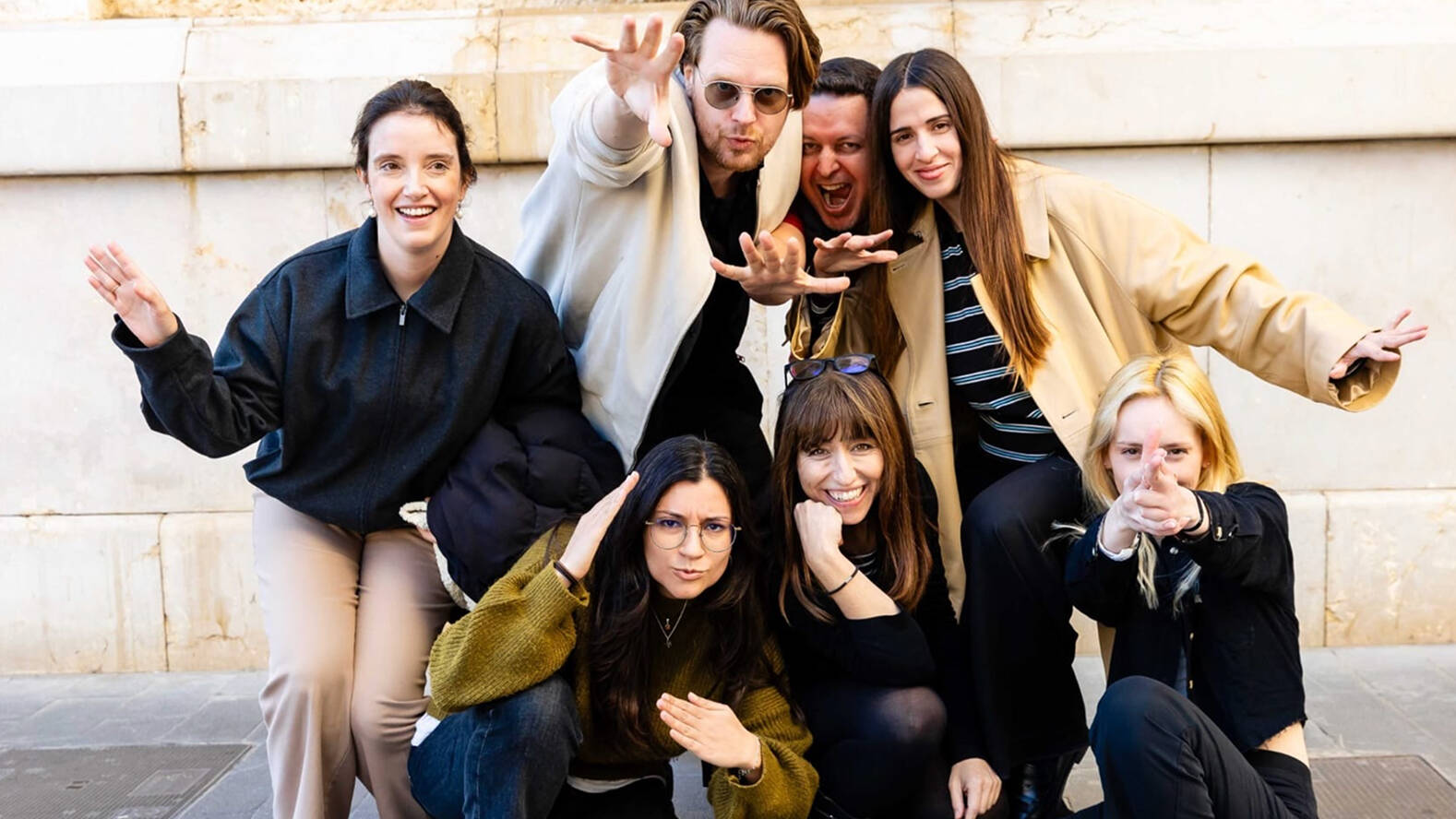
Datamaran Design Team photo ’25
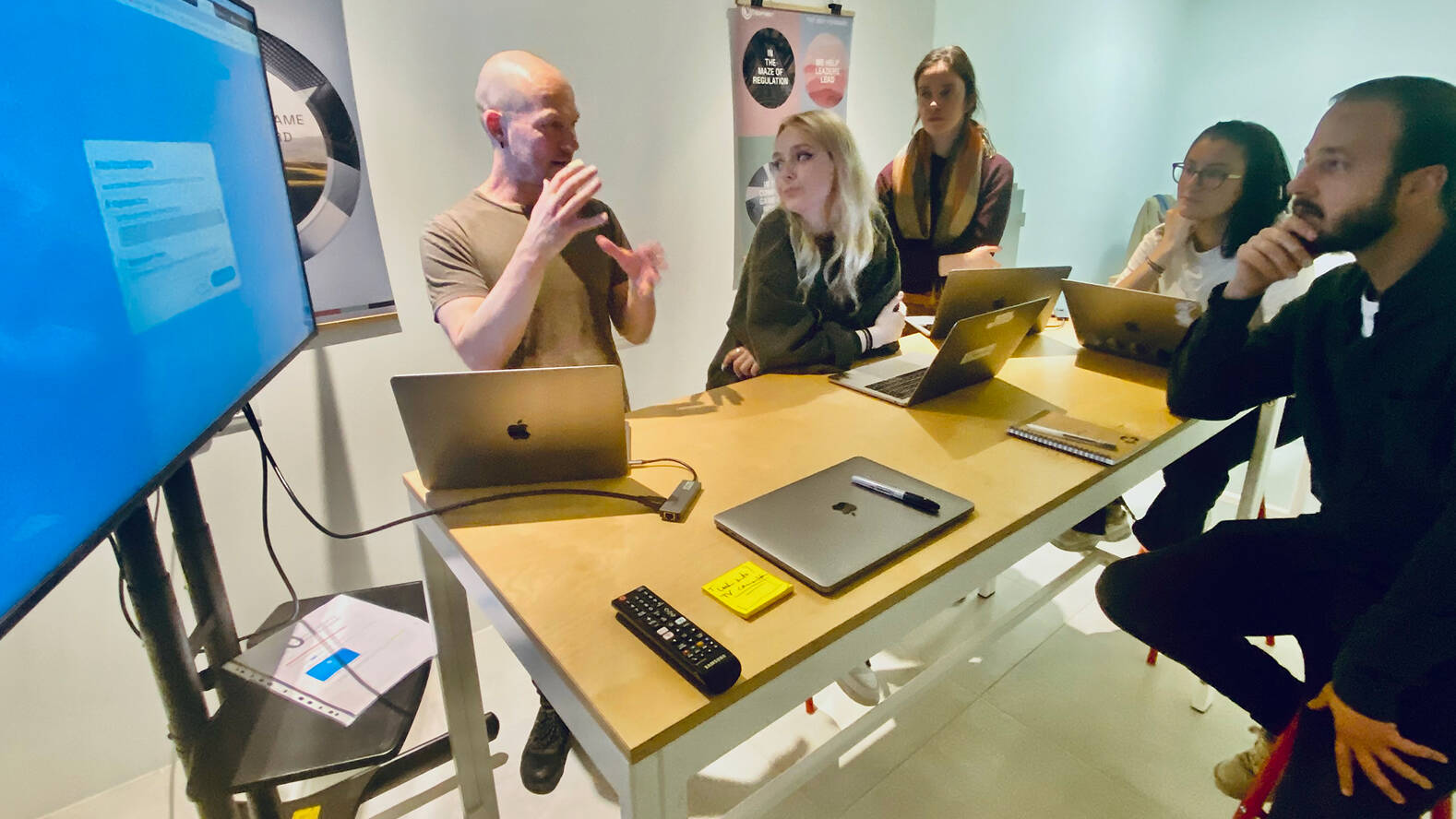
Datamaran Design Team Crit Session ’24